The value of values: why Vedānta begins by preparing the mind
In an opening lecture, teacher Glória Arieira explains Swāmi Dayānanda's text on the values in Bhagavad Gītā chapter 13 as the foundation of self-knowledge.
· 3 min read · Sources

In 1 minute
- In the opening lecture of a Sanga Urbana course, teacher Glória Arieira presented the values from chapter 13 of the Bhagavad Gītā as preparation of the mind for self-knowledge.
- Dharma, in her explanation, is not a list of rules but the wisdom of acting without violating oneself or others; inner conflict arises when one transgresses a value one already recognizes as right.
- Vedānta, she said, is a science of the Self open to anyone, and the starting point is everyone's shared desire to be happy and free of suffering.
Full article
There's a kind of suffering no one imposes from outside: the suffering of acting against what one already knows to be right. For teacher Glória Arieira, it's that conflict between what a person thinks, feels, and does that strips away peace, and it's there that the study of Vedānta should begin. She developed the idea in the opening lecture of a course offered by Sanga Urbana, a Vedānta study group based in Rio de Janeiro.
The question the lecture raises comes before philosophy itself: what kind of person is ready to hear a teaching about who they are? Vedānta's answer, in Glória's version, is someone who has first settled accounts with their own values.
Chapter 13 of the Gītā
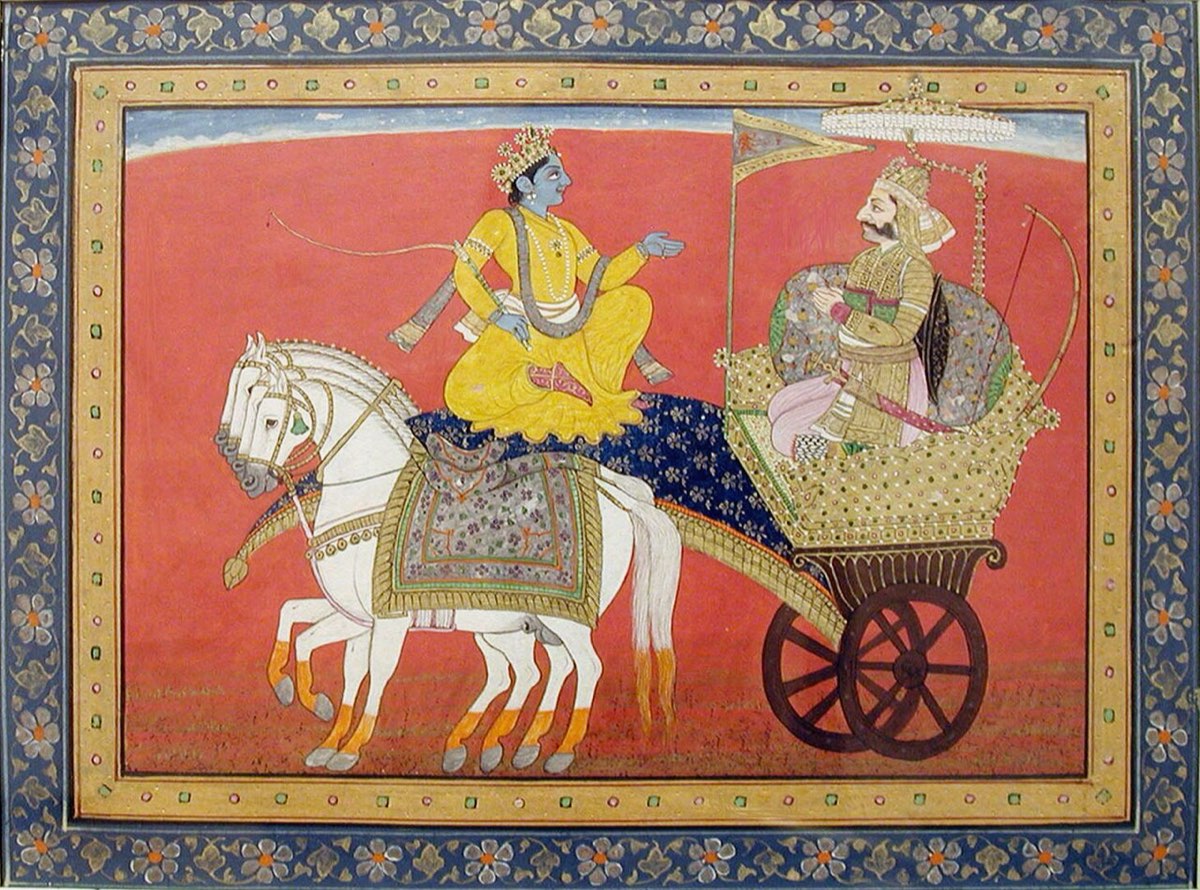
The Bhagavad Gītā, Hinduism's central text, has 18 chapters and 700 verses. Chapter 13 deals with the difference between the "field," the perishable body, and the "knower of the field," the eternal Self, and ties self-knowledge to the realization of that Self. The Sanga Urbana course, led by Marina Aryana, a longtime student of Glória's, studies the values Krishna teaches Arjuna in that chapter. The session was opened by Marcos Vinícius Marino, the founder of Sanga Urbana, who stressed the importance of keeping traditional teaching alive.
Glória, introduced as a leading figure of Advaita Vedānta in Brazil, drew on The Value of Values, a text by Swāmi Dayānanda Sarasvatī based on five verses from the chapter. The point of the title, she said, is that life changes when a person values values. Truth, compassion, non-violence, and modesty would be less a set of moral rules than tools for living with less conflict and more clarity.
Coherence as the condition for peace
The lecture opened with śānti mantras, Vedic verses of peace that she recited and translated. The peace requested extends beyond the one reciting: it reaches humanity, the wise, animals, rulers, and the Earth.
From there came the central theme. When what one thinks, feels, and does collide, Glória explained, a person "loses themselves," and loses peace along with it. Suffering, in this reading, doesn't come from the world, but from an inner incoherence.
She gave dharma a practical meaning. It isn't a code of absolute rules, but the wisdom of acting in harmony with others and with oneself. The yardstick is simple: if you wouldn't want it done to you, don't do it to another. Values, she said, work like pillows for the mind to rest on. They reduce inner noise and create the conditions to understand Vedānta's central teaching, that a person is already complete, whole, and free.
Two fronts of teaching
According to the teacher, Vedānta divides into two fronts. One is self-knowledge, the direct study of the Self's nature. The other is preparing the mind, which the tradition describes through a set of six qualities, the śamādi ṣaṭka sampatti, which Advaita Vedānta lists among the student's qualifications, alongside detachment and the desire for liberation. Without a calm, mature mind, the teaching won't take hold, like someone trying to write on water.
A science of the Self
For Glória, Vedānta is neither an Indian doctrine nor a religious one, but a science of the Self, accessible to anyone, in any era. The starting point would be common to all: wanting to be happy and free of suffering. This is the school's own self-description, and the idea of "science" here means a method of inner inquiry, not empirical science in the modern sense.
The teacher closed by noting that knowing what is right isn't enough: one must live in a way that's coherent with it, and that coherence is the ground in which self-knowledge can grow. Whoever manages to love themselves with clarity and truth, she said, is ready to discover who they are.
The course
Marina Aryana will lead the full course, with lectures on the verses of the Gītā, short reflective meditation practices, time for questions, and the use of Sanskrit terms, always explained in context. Classes are weekly, on Sanga Urbana's online platform.
Sources and references for this article
Sanga Urbana on InstagramSwāmi Dayānanda Sarasvatī, The Value of Values
Bhagavad Gita, Wikipedia (English), chapter 13Advaita Vedanta, Wikipedia (English), student qualificationsTranslated from Portuguese. This article was rewritten from a post on the original blog, in Portuguese. Read the original
Read next
 Vedanta and YogaConsciousness with a body: what Vedānta says the “self” is
 Vedanta and YogaListening to see: what Vedānta asks of those who want to know themselves
 Science and consciousnessVedānta and quantum physics: what the observer has to do with reality
 Western esotericismA Hermetic manifesto against "selective blindness": mind, ether, and archons
 Vedanta and Yoga · VideoWhy pride keeps people from faith: a reflection on the emptiness of living "well"