The straw of Agni: what the Kenopanishad teaches about the pride of the gods
In the Kenopanishad, victorious gods boast until a mysterious figure gives them a straw to burn and move; Swami Dayananda reads in this the role of the ego.
· 3 min read · Sources

In 1 minute
- In the Kenopanishad, the devas defeat the asuras and credit themselves with the victory, until Brahman appears as a yaksha and puts them to the test.
- Agni cannot burn a straw and Vayu cannot move it; Uma, goddess of knowledge, reveals to Indra that the victory was Brahman's.
- Swami Dayananda Saraswati uses the story to teach that the ego is a reflection of consciousness, and that we are instruments of life, not its owners.
Full article
The gods had just won. The enemy had fled, the world was celebrating, and the devas, amid the festivities, were arguing over the credit. One insisted he had put the demon to flight. Another said he was the one who had saved the field. A third claimed that without him there would have been no victory. The Kenopanishad opens with this scene to say that all of them were wrong.
The Kenopanishad, or Kena Upanishad, is one of the principal Upanishads, philosophical texts tied to the Vedas and foundational to the Vedānta school. It was probably composed around the middle of the first millennium BCE. Its theme is what lies behind the forces of nature, symbolized by the gods: it asserts that the cause behind all of them is Brahman, the ultimate reality. The story of the straw is its most famous episode, and Swami Dayananda Saraswati, a contemporary master of Vedānta, comments on it with humor in a video that serves as the starting point for this piece.
A celebration that becomes a lesson
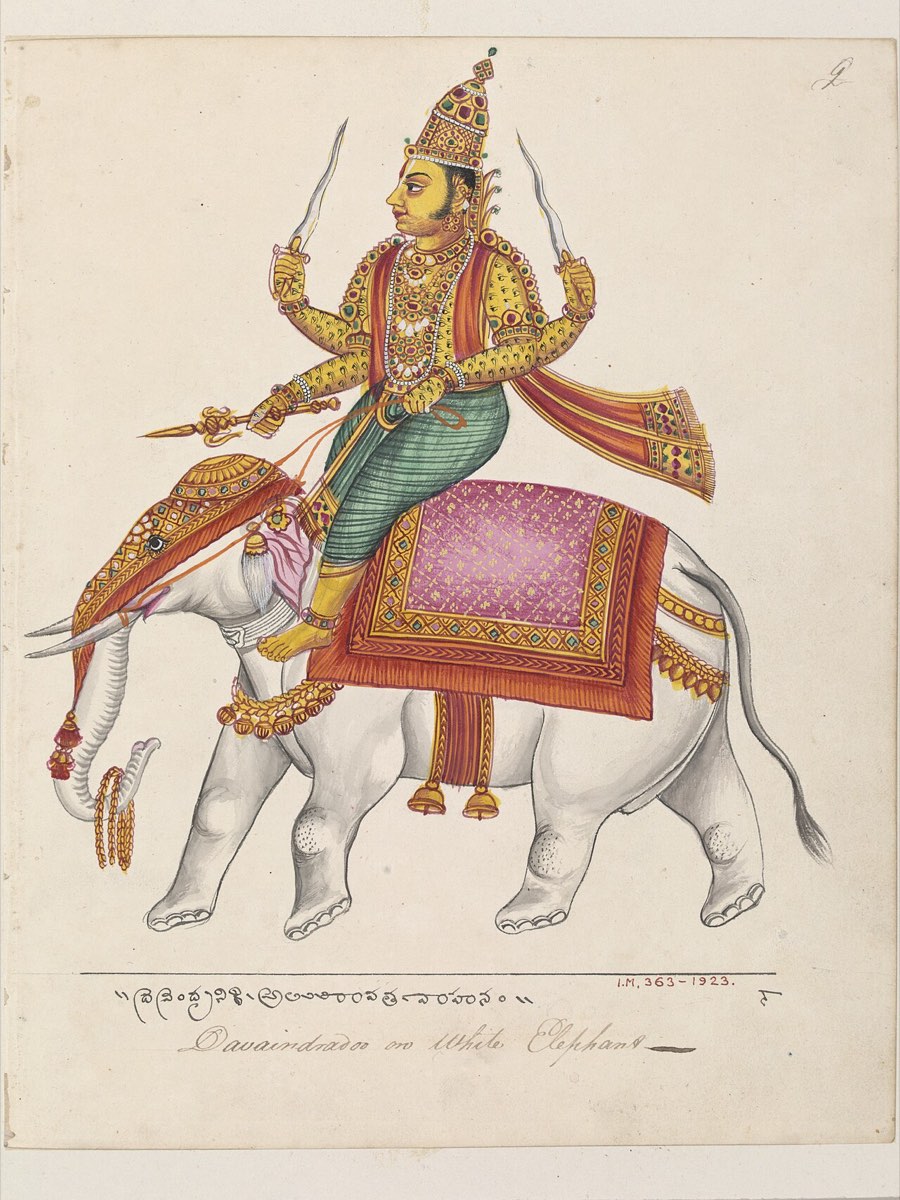
In the story, the devas had defeated the asuras, who represent the forces of ignorance. Agni, fire, Vayu, wind, and Indra, leader of the gods, each credited themselves with the triumph. The swami notes that they behaved like so many people after a victory: they glued their own identity to the action, the result, and the credit.
Brahman then decided to teach them a lesson. He appeared in the form of a yaksha, a luminous celestial being, and stood before them.
The tests
Agni went first. Asked who he was, he answered that he was the all-powerful one, he who burns everything he sees. The yaksha placed a dry straw before him and asked him to burn it. Agni tried with all his power, celebrated in the rituals, and could not. He returned with no answer.
Vayu came next, saying he could move anything in the universe. The yaksha pointed to the same straw. Vayu blew, and the straw did not even tremble. The breath of the world, the story notes, had been contained by something beyond its own source.
Indra came last. Before he could even ask his question, the yaksha disappeared. In his place appeared Uma, goddess of knowledge, who revealed what had happened: the victory belonged to Brahman, and the gods had no light of their own, only reflecting the light of the Self.
What Dayananda teaches
The swami uses the episode to lay out themes from Advaita Vedānta, the school of non-dualism, whose name means “not two.” Brahman is that on which everything that exists rests. The ego, which sees itself as the author of actions, would be only a reflection of consciousness. When someone identifies with the action and its result, they forget what they really are: the very Self that makes any experience possible at all. He asks anyone proud of their own actions: you can light a candle, but who gave you the flame of consciousness?
The speaker gives everyday examples. He compares the devas to spiritual teachers, gurus, seekers, and entrepreneurs, who confuse the channel with the source. He notes that even a talented musician should recognize that the gift does not come from them, because otherwise the ego claims the art for itself.
A message for today
In a world obsessed with productivity, status, and image, the story sounds especially current. Victories are celebrated without acknowledging the silent source behind them, and, like the devas, one risks thinking one moves life when one may instead be moved by it.
The final teaching is that people are not the authors of life, but its instruments. The more the Self is allowed to manifest, the less one struggles, the less one fears, and the less one believes in “I did it.” For the tradition, Brahman is the cause, the means, and the end, and everything else, gods included, are passing effects.
The question that remains is the text's own. If even the devas forgot Brahman, what can be expected of us?
Sources and references for this article
Kena Upanishad, commented on by Swami Dayananda Saraswati (video)
Kena Upanishad, WikipediaAdvaita Vedanta, Wikipedia (in Portuguese)Translated from Portuguese. This article was rewritten from a post on the original blog, in Portuguese. Read the original
Read next
 Vedanta and YogaListening to see: what Vedānta asks of those who want to know themselves
 Vedanta and YogaConsciousness with a body: what Vedānta says the “self” is
 Science and consciousnessVedānta and quantum physics: what the observer has to do with reality
 Western esotericismA Hermetic manifesto against "selective blindness": mind, ether, and archons
 Vedanta and Yoga · VideoNachiketas and Death: what the Upanishads teach about the eternal Self and immortality