Allan Kardec's “testament”: what is known and what is narrative
A video claims Kardec handed over secret manuscripts in 1869, to be opened in 2024; nothing proves the papers exist, and the material itself admits to being a dramatization.
· 3 min read · Sources

In 1 minute
- Allan Kardec, codifier of Spiritism, died in Paris on March 31, 1869; the story of manuscripts handed over the day before has no documentary proof.
- The narrative describes a soul with seven bodies, death in seven phases, prophecies from 2020 to 2050, and spiritual inventions, ideas that go beyond what Kardec published.
- The source material itself declares that it is a dramatization and asks for a symbolic reading; that is why this piece is classified as a report.
Full article
Paris, March 30, 1869. According to a narrative circulating in a video, Allan Kardec, then 64 years old, hands journalist Auguste Lemer a stack of manuscripts, with the recommendation of higher spirits: they may only be opened in 2024. The next day, March 31, Kardec dies, a victim of an aneurysm, according to his Wikipedia biography.
The coincidence of dates gives the story a romantic air, and that is why it works. But the source material itself, a video from the channel @RelatosOcultosOficial, warns that it is a dramatization, meant to be read symbolically. Nothing in it points to a document, an archive, or a witness that proves the papers existed. It is worth looking, then, at what the narrative claims, where these ideas seem to come from, and what it reveals about the appetite for guarded secrets.
Who Kardec was
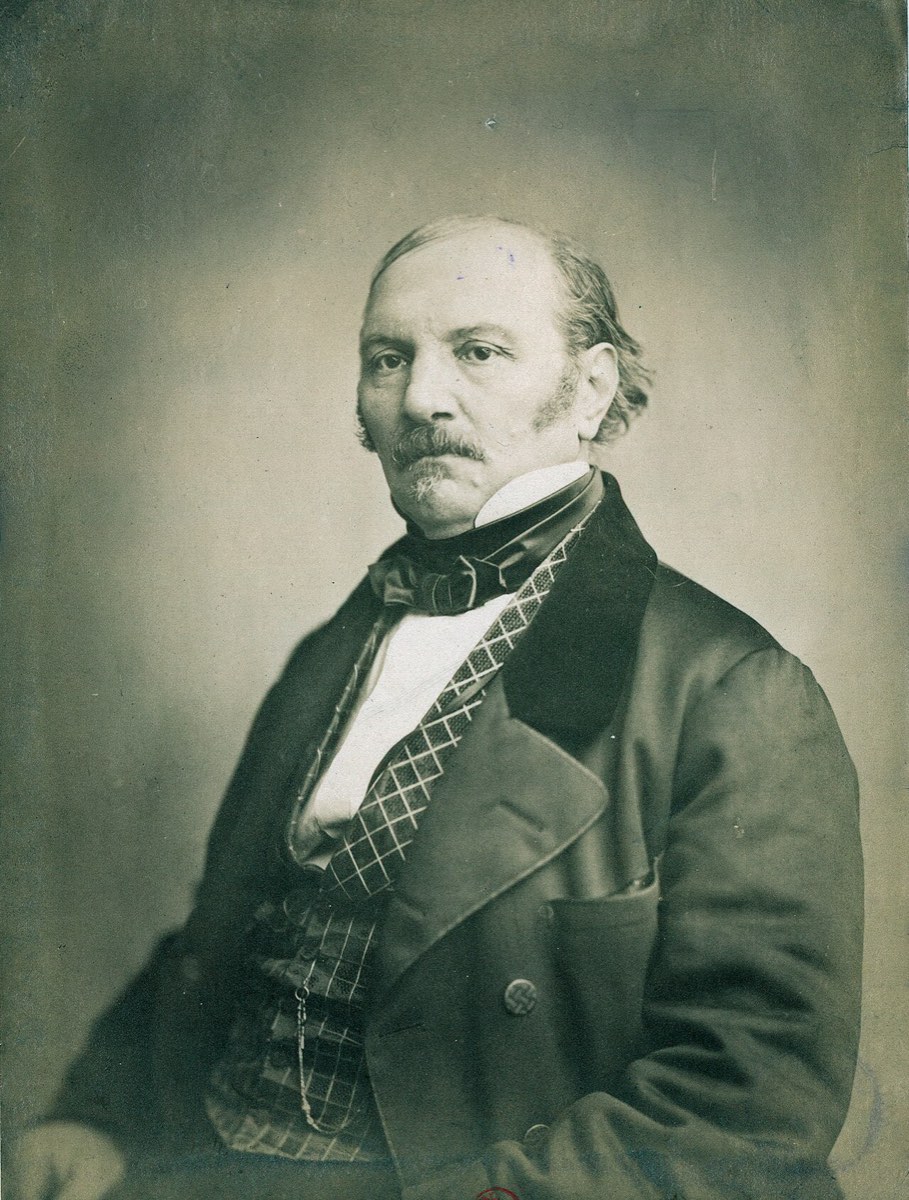
Hippolyte Léon Denizard Rivail was born in Lyon in 1804 and was an educator, author, and translator. Under the pseudonym Allan Kardec, he published The Spirits' Book on April 18, 1857, the founding landmark of Spiritism, and in 1858 created the Parisian Society of Spiritist Studies. He was, therefore, an organizer of texts received through mediums, not a prophet of secret manuscripts. His work, published during his lifetime, is extensive and accessible.
What the narrative claims
The first theme is the soul, described as a microcosm of seven spiritual bodies: etheric, emotional, lower mental, higher mental, causal, buddhic, and atmic, with an eighth, the logoic, reserved for fully realized souls. The Spiritism codified by Kardec works with a different scheme: the spirit is connected to the body by a semi-material envelope, the perispirit. The division into seven bodies, then, is not what the published doctrine describes.
The second theme is death, which the narrative treats as a process of up to seven stages: recognizing the new condition, reviewing one's entire life, reuniting with guides and family, assessing one's experiences, undergoing spiritual healing, choosing between reincarnating or remaining, and integrating into the new dimension.
Reincarnation, planets, and dates
On reincarnation, the video lists “hidden laws”: returning in groups, intervals proportional to one's evolution, choosing one's destination by vibrational affinity, and souls coming from other solar systems, the “starseeds.” A soul divided between planes would explain so-called twin souls. There are also beings such as Ashtar, from Sirius, and a hierarchy in which Jesus would be Earth's “solar Logos.”
The predictions span 2020 to 2050: in the first decade, pandemics, climate change, and growing interest in spirituality; then, confirmation of life after death and a universal religion; finally, spiritual technologies and healing centers, on an Earth transformed into a world of regeneration, where only more evolved souls would incarnate. Predictions with a fixed year have one trait in common: they are either vague enough to be confirmed, or specific enough to be checked, and the former come from a generous reading of the facts.
Inventions and instructions
The text attributes to Kardec a vision of devices that do not exist: spirit-ometers to measure vibrations, cameras that would record spirits, vibrational medicine, computers capable of accessing memories of past lives, and a spiritual energy that would replace fuels. It cites seven levels of the mind and phenomena such as bilocation, telekinesis, and materialization.
The instructions for 2024 would be global study groups, the training of mediums with new techniques, healing centers, schools for mediumistic children, and a new Gospel uniting science and spirituality. The video concludes that the moment has arrived, and that whoever watches it is part of a “silent revolution.”
What remains open
For the reader, the central question is not whether the prophecies come true, but whose voice this is. The manuscripts, if they existed, would be a historical document; without proof, they are devotional fiction, written by someone who admires Kardec and wants to hear him speak about the present. That is the genre the video's own disclaimer acknowledges.
What remains is the question it leaves behind: is what one reads the voice of Kardec, or the imagination of whoever recreates it?
Sources and references for this article
Video from the channel @RelatosOcultosOficial about Allan Kardec's alleged testament
Allan Kardec, Portuguese Wikipedia (life, death on March 31, 1869, and works)Spiritism, Portuguese Wikipedia (spirit, perispirit, and principles of the doctrine)Translated from Portuguese. This article was rewritten from a post on the original blog, in Portuguese. Read the original
Read next
 Death and beyondHow Allan Kardec tested spirit messages and assembled the Spiritist codification
 Death and beyondKardec, Socrates, and Plato: the morality of Christ separated from dogma in the Spiritist Gospel
 Western esotericism · VideoBlavatsky and the “veil”: a warning attributed to the founder of Theosophy that no one can verify
 Western esotericism · VideoAtlantis, seven races, and ancient gods: an esoteric history of humanity
 Death and beyond · VideoWhat souls do after death, in a Spiritist view: work, study, and service