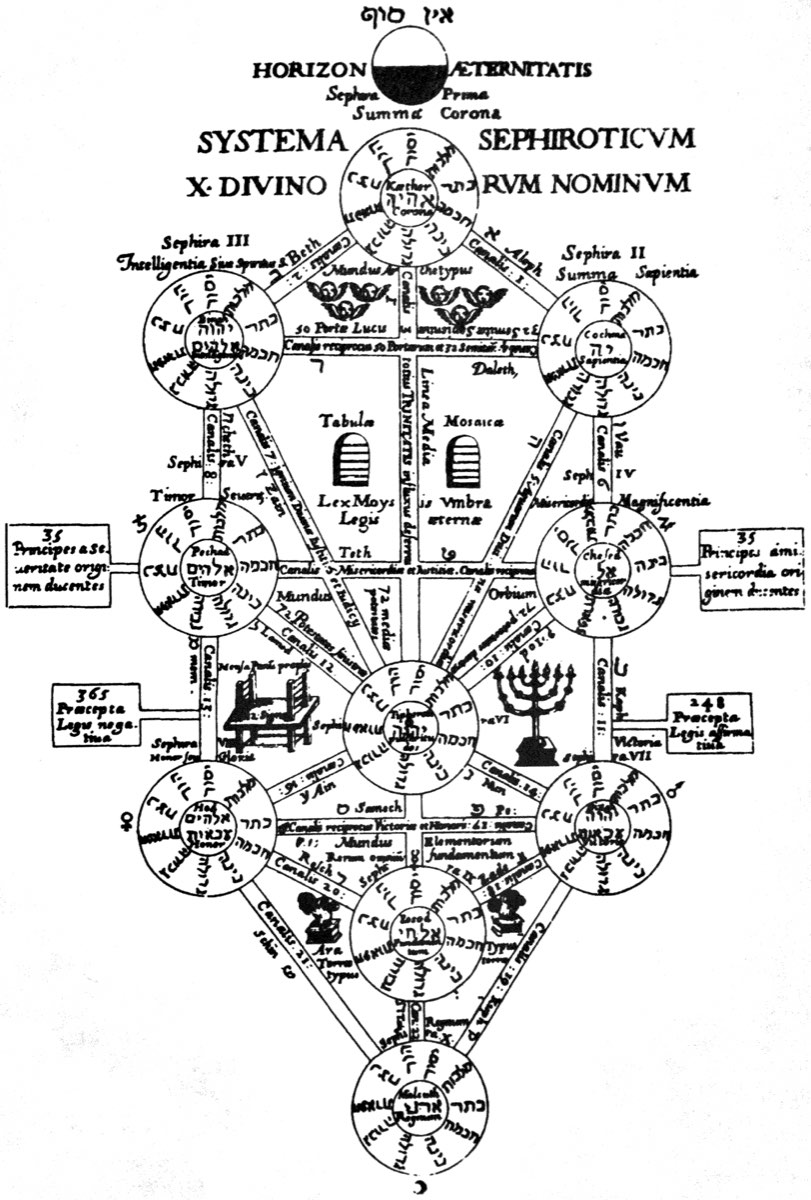
The Kybalion's seven hermetic principles: a map for your own life
The Kybalion, from 1908, condenses Hermeticism into seven principles; a Nova Acrópole lecture presents them as inner formation, not magic.
· 3 min read · Sources

In 1 minute
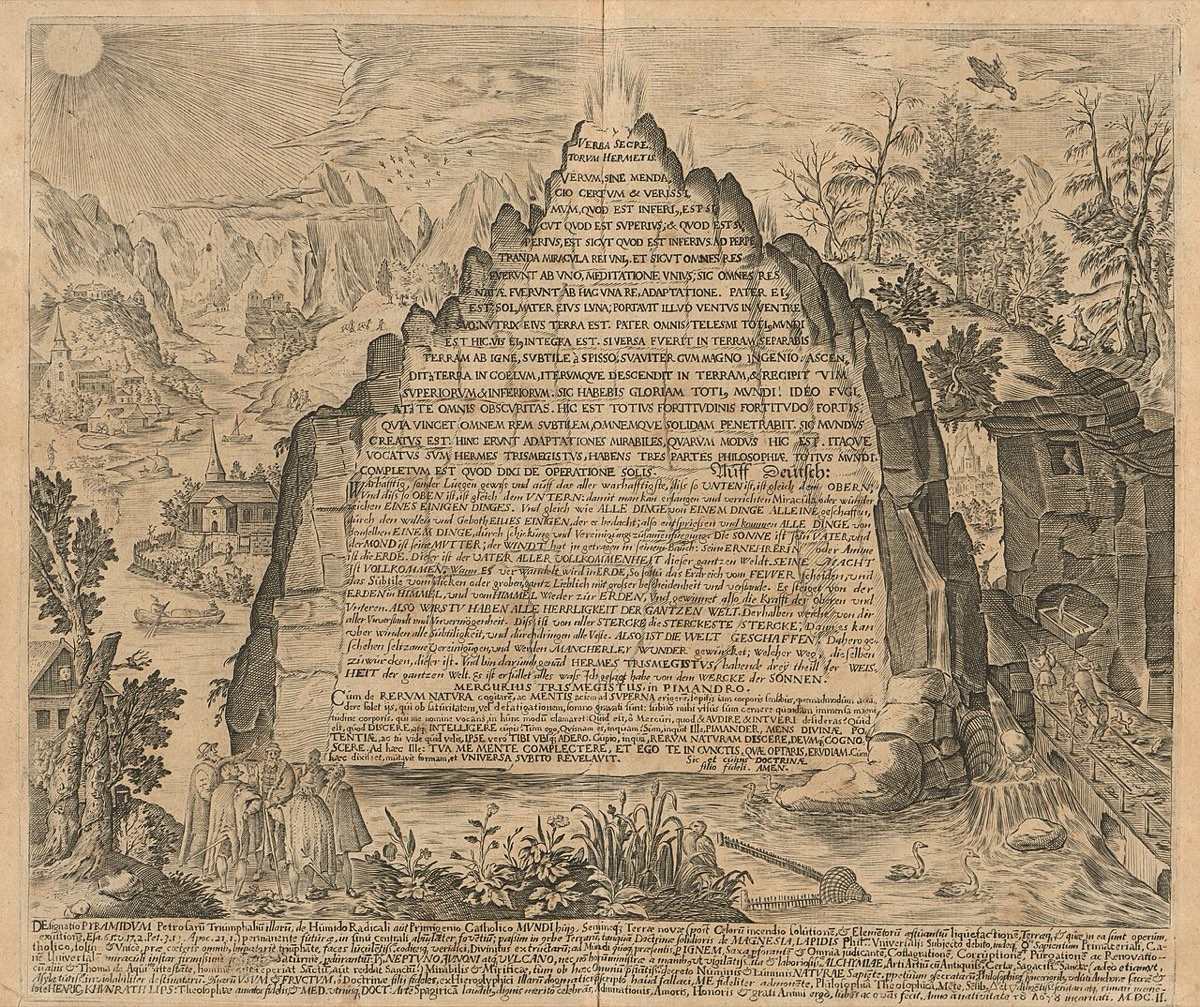
- The Kybalion, from 1908, attributes to Hermes Trismegistus seven principles said to govern the physical, emotional, mental, and spiritual planes.
- They are: Mentalism, Correspondence, Vibration, Polarity, Rhythm, Cause and Effect, and Gender.
- In Nova Acrópole's reading, the book is a mirror for recognizing these laws in what one does and feels; it is tradition, not scientific conclusion.
Full article
A book signed by three authors who never identify themselves promises a key to understanding what happens to a person, from pain to success. The Kybalion, published in 1908 in the United States under the pseudonym "the Three Initiates," attributes to the sage Hermes Trismegistus, the wise Egyptian figure of the hermetic tradition, seven principles said to govern life on every plane: physical, emotional, mental, and spiritual.
Nova Acrópole, a school of philosophy that teaches the work chapter by chapter, opens the series with an overview of the seven principles before studying each one. Everything that follows belongs to the hermetic tradition and to this school's reading of it, not to scientific conclusions. It serves, however, as a map for understanding what the book actually claims.
A mirror, not a magic manual
The lecture insists on what the book is not. It is not a practical manual of magic, nor a religious treatise. It is presented as a tool for inner formation, a mirror of the universe. The proposal is to study each principle calmly, in a philosophical and symbolic key, starting from the idea that behind any experience, good or bad, one of them would be at work.
The seven principles
The first is Mentalism: the All is Mind, and the universe is mental. Nothing would exist outside the Mind of the All, and matter and time would be transient manifestations of that thought. Everything, therefore, would begin as an idea, and the mind would be the field of creation.
The second, Correspondence, says that what is above is as what is below. Macrocosm and microcosm would mirror one another. The lecture offers everyday examples: the way someone tidies a room or drives a car would reveal the way they conduct their life. Hence the idea that changing the inside changes the outside.
The third, Vibration, states that nothing is still. From the atom to the star, everything moves, and matter and spirit differ only in degree of vibration. The subtler the vibration, the closer to the divine. Music, art, words, and intention would thus affect each person's frequency.
The fourth, Polarity, holds that opposites are of the same nature and differ only in degree. Cold and heat are both temperature; love and hate are said to be extremes of the same energy. Whoever understands this could transmute emotions and attitudes, which the lecture calls the basis of inner alchemy.
The fifth, Rhythm, describes the ebb and flow of everything, like the tides. Every action generates a reaction, every excess creates a void, every high precedes a fall. The secret would be to neutralize the peaks and valleys and seek the center, balance.
The sixth, Cause and Effect, states that nothing happens by luck: chance would simply be the name given to an unrecognized law. What one lives through would result from causes, visible or not, set in motion by the person themselves. For the lecture, the wise act on causes, and the ignorant react to effects.
The seventh, Gender, deals with a masculine and a feminine principle present on every plane. The reference is not sexual but energetic: one polarity that creates and another that generates. Creative thought would need receptive intuition to produce wisdom.
The key and the temple
The Kybalion states, in the words the lecture cites, that whoever fully understands these principles holds the key with which every door of the temple opens. The temple, the lecture clarifies, is not a religious building, but the universe and, above all, human consciousness.
The goal is not to memorize the laws, but to recognize them in what one does, feels, attracts, suffers, and repeats. Observing with a philosopher's eye, the lecture says, turns a simple chair into a lesson.
Where the analogy ends
This reading has a limit worth marking. Terms like vibration and polarity come from the vocabulary of physics, but in the book they function as metaphors and as a worldview, not as theories that can be measured. Whoever reads The Kybalion as science or as a promise of power finds little; whoever reads it as a mirror of what they do and feel may find more. The study continues with the first principle, that of Mentalism, the subject of chapter 3.
Sources and references for this article
Lesson 2 of the Nova Acrópole series on the Kybalion
_The Kybalion_ (1908), Three Initiates
The Kybalion, Three Initiates, 1908 (full English text, Project Gutenberg)The Kybalion, Wikipedia (publication, authorship, and the seven principles)Hermeticism, WikipediaTranslated from Portuguese. This article was rewritten from a post on the original blog, in Portuguese. Read the original
Read next
 Western esotericism · VideoThe Kybalion and its seven principles: a 1908 book that speaks in Egypt's name
 Western esotericismA Hermetic manifesto against "selective blindness": mind, ether, and archons
 Vedanta and YogaGita, lesson 16: belief isn't knowledge, and the Veda as a mirror of the Self
 Vedanta and YogaKatha Upanishad: the young Nachiketas and the question Death tried to dodge
 Western esotericism · VideoKabbalah and the Tree of Life: a mystical map of creation, the soul, and the way back