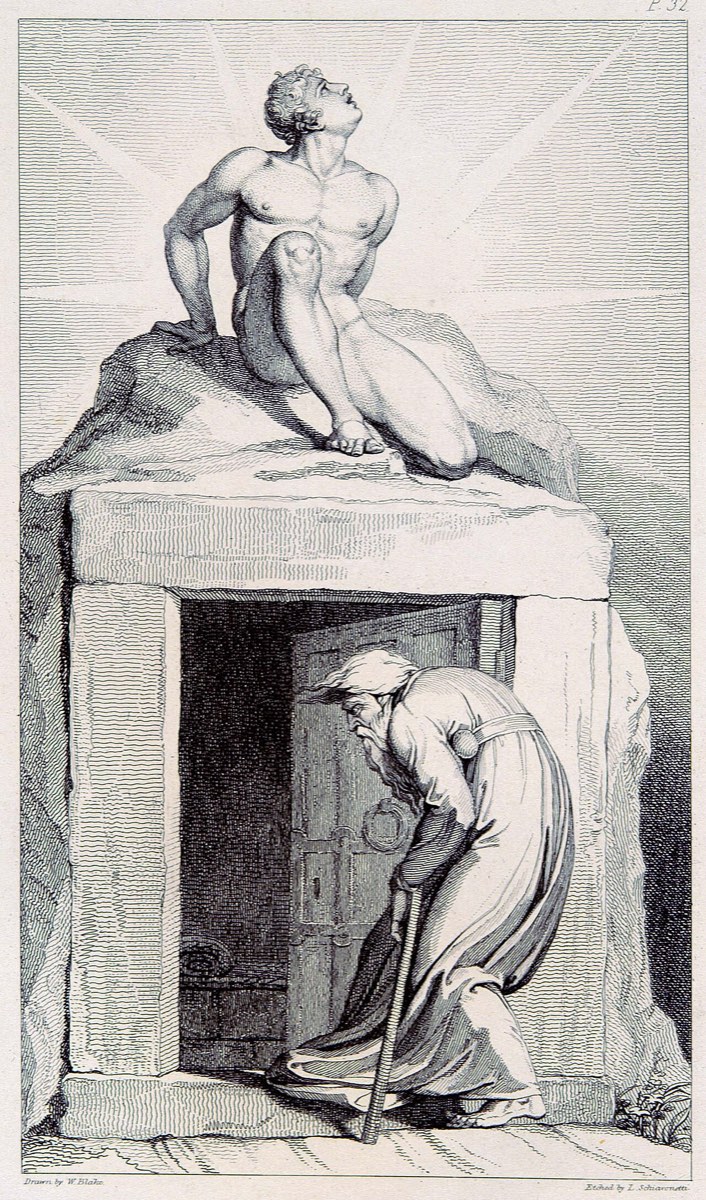
Near-death experiences: what repeats across accounts, and what science still can't explain
A tunnel of light, a life review and leaving the body show up in accounts worldwide; medicine measures the phenomenon but still doesn't know what it is.
· 4 min read · Sources


In 1 minute
- About 10% to 18% of cardiac arrest survivors report a near-death experience (NDE), with elements that repeat across different cultures.
- Recent studies show a surge of electrical activity in the dying brain, a biological clue that still doesn't explain everything patients describe.
- For spiritualist researchers like Alexandre Pereira, NDEs indicate that consciousness exists outside the body; science neither confirms nor rules out that hypothesis.
Full article
The heart stops, the medical team rushes in, and for a few minutes the patient is, for all practical purposes, dead. When they come back, some of these people tell the same story: they saw their own body from above, passed through a light, met people who had already died, and watched their entire life replay in an instant. The country, the age and the belief system change; the script barely does.
That repetition is what makes the near-death experience, or NDE, one of the most intriguing subjects at the border between medicine and spirituality. That it happens, as a lived experience, is no longer in dispute. What remains in dispute is what it means: an effect of a collapsing brain, or, as spiritualist researchers argue, proof that consciousness does not depend on one.
A script that crosses cultures
The term went global in 1975, with Life After Life, by the American psychiatrist Raymond Moody, who gathered about 150 accounts. Eight years later, psychiatrist Bruce Greyson created a 16-item scale to measure the depth of an NDE. The list includes a sense of peace, separation from the body, an intense light, encountering beings or deceased relatives, and a life review — still the field's reference today.
Not everyone experiences every element. Leaving the body is usually the first; the tunnel appears in only some cases. Almost always there is a peace described as greater than anything known, so much so that many say they did not want to come back. Some report being sent back. Others say they were given a choice.
Independent researcher Alexandre Pereira, who has studied the subject for years and discussed it in a long interview on the Sem Groselha podcast, highlights precisely the life review: minutes that feel like years, with every gesture and thought re-examined without outside judgment. The most consistent effect, he notes, comes afterward. People who go through an NDE usually lose their fear of dying.
How many, and what doctors found
The most cited study appeared in 2001 in The Lancet. Dutch doctors followed 344 cardiac arrest survivors and found NDE accounts in 18% of them. In another major study, AWARE, from 2014, the rate was close to 10%. There was no clear link to how long the arrest lasted, the drugs used, or any prior fear of death, which ruled out some simple explanations.
The most disputed point is accounts of perception during unconsciousness: the patient who, on waking, describes the doctors' conversation or an object in another room. Advocates of the spiritualist thesis, like Pereira, see the strongest evidence in these cases. To test it, physician Sam Parnia placed images on shelves near the ceiling of emergency rooms, visible only from above. In the study, published in 2014 with more than 2,000 cardiac arrests, no patient identified the images. There was a single confirmed case of perception, in a room with no shelf.
The brain that lights up while dying
The biological explanation has also advanced. In 2013, researchers at the University of Michigan recorded, in rats, a surge of organized electrical activity in the seconds following cardiac arrest. In 2023, the same group observed something similar in two of four patients who died after life support was withdrawn, in areas linked to consciousness and memory.
It is a clue, not an answer. It shows that a collapsing brain does not shut off all at once, and can produce an intense experience. It does not explain why so many people report the same sequence, nor the accounts of perception at a distance. Older hypotheses, such as lack of oxygen or the effect of medication, have not held up as a single cause.
The hypothesis of consciousness outside the body
On the other side is the reading Pereira defends, one with a long tradition in Spiritism and in esoteric schools. In it, consciousness would precede the body and continue after it, and the NDE would be a glimpse of that state. "Our consciousness, our essence, is not our body," he sums up. In the interview, he goes further, citing accounts of travel through space and memories of other lives, which he himself classifies as rare and impossible to prove.
It is a thesis science cannot confirm today. Nor can it rule it out. Pereira sells a course on out-of-body experiences, advertised in the episode itself, and argues that the best proof is personal experience. Medicine works with the opposite, proof that others can repeat.
What remains open
Half a century after Moody, the NDE lives in hospitals, in scientific journals and on podcasts. It is known to be common, to repeat across different cultures, and to change the lives of those who go through it. What it is remains unknown. Between the electrical surge of a dying brain and a consciousness that would survive it, Moody's question remains unanswered. It is, perhaps, the oldest question of all: what happens when we die.
Source video
Sources and references for this article
What Is It Like to Die? NDE specialist Alexandre Pereira. Sem Groselha podcast (a Brazilian YouTube show), June 12, 2025Van Lommel, P. et al. Near-death experience in survivors of cardiac arrest. The Lancet, 2001Parnia, S. et al. AWARE: AWAreness during REsuscitation, a prospective study. Resuscitation, 2014Greyson, B. The Near-Death Experience Scale. Journal of Nervous and Mental Disease, 1983Borjigin, J. et al. Surge of neurophysiological coherence and connectivity in the dying brain. PNAS, 2013Xu, G. et al. Surge of neurophysiological coupling and connectivity of gamma oscillations in the dying human brain. PNAS, 2023Near-death experience, Wikipedia (overview and bibliography, including Raymond Moody, 1975)Read next
 Death and beyond · VideoThe rock that asks about love: Peter's near-death experience, in 1974
 Death and beyond · VideoLight, a silent hall and a dark valley: José Maurício's three experiences
 Science and consciousness · VideoConsciousness during sleep: what science describes, and what is pure speculation
 Vedanta and YogaGita, lesson 20: consciousness isn't in the world, the world is in it
 Death and beyond · Video"Dying is changing clothes": what Laércio Fonseca says about the afterlife