Sue Morter and the energetic anatomy of awakening: twelve centers, a doughnut-shaped field and the body as the home of light
Chiropractor Sue Morter describes a vision of light during meditation and proposes a map of twelve energy centers for living awakening in the body; it is her model, not science.
· 4 min read · Sources
Source video
Sounds True · “Dr. Sue Morter: The Energetic Architecture of Awakening | Insights at the Edge”
More videos and documentaries in the Videos tabIn 1 minute
- Dr. Sue Morter, a chiropractor and author of The Energy Codes and The Anatomy of Awakening, says that in a group meditation 25 years ago she saw herself as a ray of conscious light, and spent years learning to return to that state.
- Her thesis is that light does not need to be sought but embodied: blockages would be gaps in communication within a doughnut-shaped energy field that she says surrounds the body, and the way back is to turn attention inward and into the body.
- The map of twelve centers (the seven traditional chakras plus five above, below and outside the body) is her own proposal, without scientific proof; she sells books, a yoga school and an institute.
Full article
During a group meditation, in a room where participants chanted Sanskrit sounds she did not know, the American chiropractor Sue Morter says she stopped seeing her own body and saw herself as "a ray of light," conscious and tied to the Earth, which looked about the size of a marble. That was 25 years ago. Since then Morter, author of The Energy Codes and now The Anatomy of Awakening, founder of a yoga school and of an institute that bears her name, has tried to teach others how to live in that state without losing it.
The experience behind the method
She says she arrived at meditation tired of being the person who did everything for others, and suffering from migraines. With long breaths and repeated chanting, she entered, she says, a light far brighter than the desert at noon, with no discomfort. She felt complete: "nothing missing, nothing broken." With each inhale a pink horizon rose; with each exhale it lowered, and the light, as it passed through her, seemed to become love.
Back in the room, she says, she looked at the teacher and realized the teacher understood what was happening. Morter links the episode to an impossible list of tasks the teacher had given her beforehand: the shock, she suggests, broke the habit of pleasing others and opened the way. It is a personal account of a mystical experience and is reported here as such; it cannot be verified.
"I had it, I lost it" and what came next
The obvious question, put by interviewer Tami Simon, is stabilization: people who have such a moment often say "I got it, I lost it." Morter answers that the experience opened her mind but did not change how she related to others, ran her business or cared for her body. She became obsessed with reproducing it and found, she says, that forcing never worked, while surrendering, in the middle of seeing patients, brought the state back in flashes. It took about five years, with no teacher, before she could "go into this inner realm on command."
For her, the search for enlightenment aims at the wrong target: "we are the light," and what is missing is embodiment. She says her migraines disappeared and that the scoliosis she was born with, along with back and neck pain, improved as she learned to produce a bodily response to the states of consciousness she was accessing. These are accounts from her own case, not clinical evidence.
A doughnut-shaped field
The core of the proposal is bioenergetics: the set of energies that, in her view, build, regulate and heal the body. Morter describes a "toroidal" field, a doughnut-shaped flow in which energy descends, touches the Earth, rises again and recycles, and says this field is "measurable." In the portion transcribed, the interview presents no studies supporting this, and conventional physics does not recognize such a field around the human body as a basis for healing.
According to her, most people "shut down" parts of this circulation before age 10, when they feel unsafe, unfree or voiceless. The energy then "detours," creates a distortion, and the person comes to see a distorted world. Blockages, she says, are not obstacles to fix but gaps in communication, like potholes on a highway.
The word she uses for the remedy is pratyahara, the yoga term for withdrawing the senses: stop seeking approval outside and turn back to oneself, with responsibility rather than selfishness. At another point she claims that worrying about "regulating the nervous system" dysregulates the nervous system, because worry would be the main source of dysregulation. That is her opinion about self-care; the physiology of stress is far more complex than the sentence suggests.
Twelve centers, from the body to the golden egg
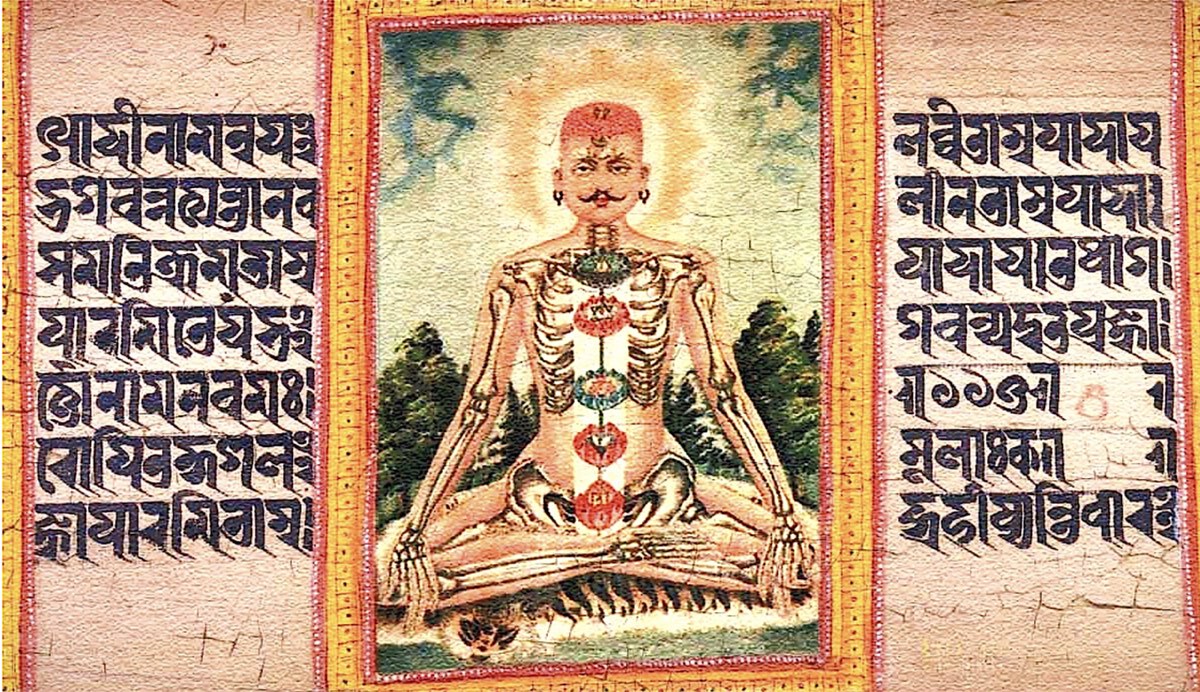
Morter teaches a map of twelve centers. The first seven are the traditional chakras. The other five are the eighth and ninth, above the head (the ninth, about four feet up, tied to "purpose" and revelations), the tenth, below the feet, "two feet or more into the earth," which she describes as the root of an invisible anatomy, the eleventh, in the hands and feet, and the twelfth, a large oval of vibration around the body that she calls the "golden egg" and the divine presence.
She says she saw energy as a child, switched that perception off around age 12 when she noticed it made her mother nervous, and recovered it after the 2000 experience. She also links the golden egg to the halos painted around saints in the Renaissance. The idea of chakras beyond seven circulates in some esoteric schools; Morter herself says she later discovered others had written about it, which reassured her, but that does not make it consensus traditional knowledge.
What to take as fact and what as proposal
What the conversation reliably shows is Morter's position: a health professional trained in chiropractic who reads a personal experience as proof that consciousness comes before matter and that the body can "embody" light. That speaks to many people's wish for a practice joining meditation and body, and there is evidence that meditation reduces stress, though not for the twelve-center map or the doughnut-shaped field.
There is also a conflict of interest to declare: the episode promotes her new book, and Morter leads a yoga school and an institute that sell courses. The conversation was published by Sounds True, which also sells courses and a membership platform on spirituality, and whose ads appear in the episode.
For those interested in the subject, the value lies less in the geography of the subtle body she draws than in the question running through the conversation: how to turn an intense experience that lasts minutes into a way of living that lasts years.
Sources and references for this article
Dr. Sue Morter: The Energetic Architecture of Awakening | Insights at the Edge. Sounds True, YouTube, 10 Nov 2026Sounds True, official channel of the Insights at the Edge podcastGet the best articles of the week
One email a week, no spam. Unsubscribe anytime.
Read next
 Experiences and channelings · VideoAkashic Records: where the idea of a universal memory comes from, and how to access it
 Experiences and channelingsDo you create the reality you live in? The "mirror of the universe" thesis
 The East · VideoMexican Buddhists: how pain leads converts to meditation in a Catholic country
 Science and consciousness · VideoConsciousness during sleep: what science describes, and what is pure speculation
 Science and consciousness · VideoYoga and meditation in Brazil's public health system: a Fiocruz documentary from Maré to Inca