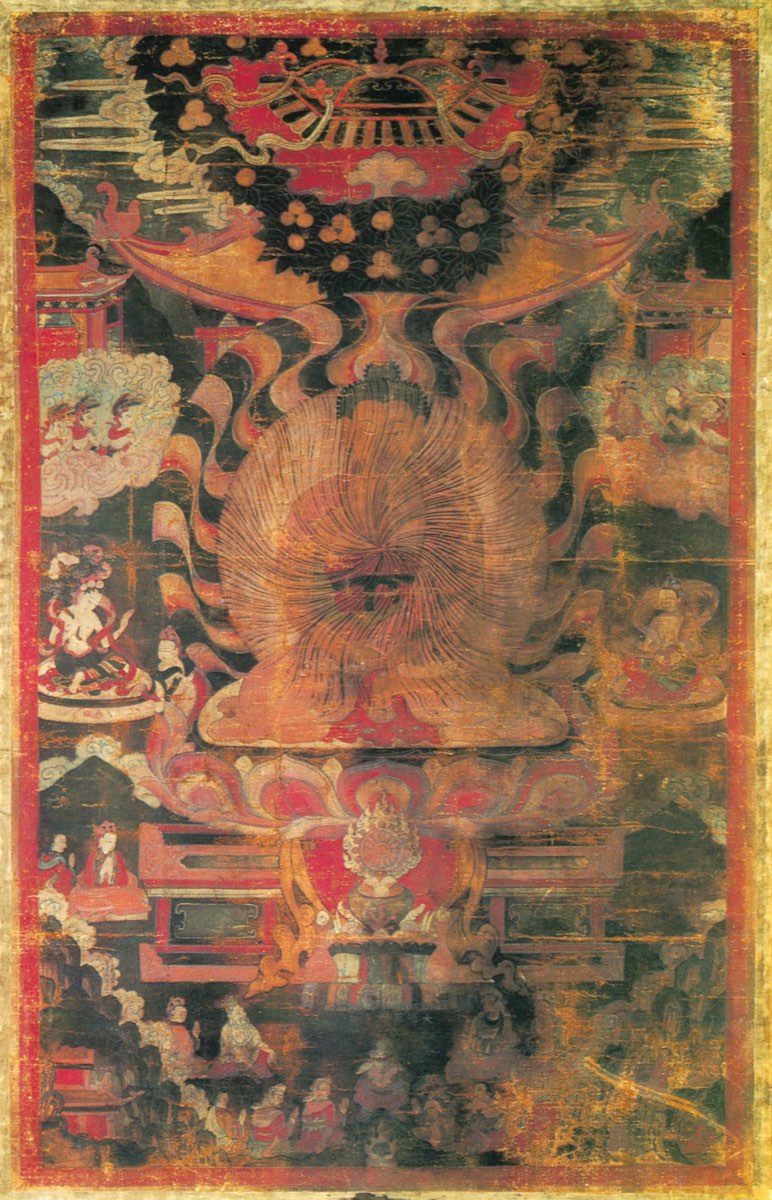
Mexican Buddhists: how pain leads converts to meditation in a Catholic country
An episode of TV UNAM's Conversos series hears Mexicans and Spaniards who came to Buddhism through loss or depression, and visits Zen and Triratna centres.
· 2 min read · Sources
Source video
TV UNAM · “Conversos - Capítulo 2: Budistas mexicanos”
More videos and documentaries in the Videos tabIn 1 minute
- Conversos, a TV UNAM series, hears Mexicans and Spaniards living in Mexico who came to Buddhism almost always through a loss, a crisis or depression.
- The episode visits Zen and Triratna centres, Casa Tíbet México and meditation workshops at UNAM's Faculty of Psychology.
- One specialist estimates there are 5,000 practitioners in the country; the 2010 census recorded about 14,000 people who identified as Buddhist.
Full article
In 2010, the death of a friend of the same age left one of the interviewees asking who they were and what they were doing here. Another person came through a different door: a meditation course to prevent depressive episodes. Almost everyone in the second chapter of Conversos tells the same story. They came to Buddhism through pain.
The documentary series is from TV UNAM, the broadcaster of the National Autonomous University of Mexico, and follows Mexicans who left the religion they were born into for another. In a mostly Catholic country, Buddhism is a small minority that has only gained ground in recent decades.
Who speaks
David Prats, a Spaniard from Valencia, practises Zen and writes poetry. A practitioner of the Triratna Buddhist Order, ordained after five years of preparation, received a spiritual name meaning "she whose playful joy shines like the sun". An illustrator tells how a master's degree on the Tibetan Book of the Dead took her to Valencia, where she met David meditating at a Buddhist centre. The two married in Mexico.
A tradition without a creator god
A specialist explains the basics: the buddhadharma was born in the 6th century BC with Siddhartha Gautama, the Buddha, "the awakened one"; it has no creator god and no pope, and it divides into Theravada, focused on personal liberation, and Mahayana, whose ideal is to free all beings. The film visits Casa Tíbet México, founded in 1989 by the 14th Dalai Lama, a meditation space at the Universidad Iberoamericana and workshops at UNAM's Faculty of Psychology that use meditation in clinical care.
Family, meat and ritual
Conversion brings friction. One convert tried to bring their parents to Buddhism while the parents tried to win them back to Catholicism, until the convert decided simply to love them as they were. Vegetarianism, tied to the vow of non-violence, was the hardest part at family meals. The film shows the puja, a ritual with a candle, a flower and incense, and the seven-day seated Zen retreat.
What to keep in mind
The numbers are vague: the specialist reckons there are some 5,000 practitioners in the country, and the 2010 census recorded about 14,000 people who identified as Buddhist. One interviewee pushes the origin of Buddhism back to 3,000 years before Christ, a date that does not hold up. And the line that the brain cannot tell reality from thought is a simplification.
It is worth watching for the faces: ordinary people, far from Asia, trying to live more calmly in a world that, as one of them puts it, teaches that you must have, have and have.
Sources and references for this article
Conversos - Capítulo 2: Budistas mexicanos. TV UNAM, YouTube, 18 Dec 2018Budismo en México, Spanish WikipediaCasa Tíbet México, official siteGet the best articles of the week
One email a week, no spam. Unsubscribe anytime.
Read next
 The East · VideoDaitoku-ji: a day inside the Kyoto Zen monastery where the garden also teaches
 The East · VideoPortraits of Faith: Brazilian Taoism, between tai chi, the altar and meditation
 Indigenous peoples · VideoShamanism in Mexico: city dwellers who took up the path, and a warning from anthropologists
 Vedanta and Yoga · VideoSamadhi, Part 2: the film that seeks the truth all traditions share, beyond thought
 The East · VideoA Joyful Mind: Mingyur Rinpoche, the monkey mind and what meditation really is