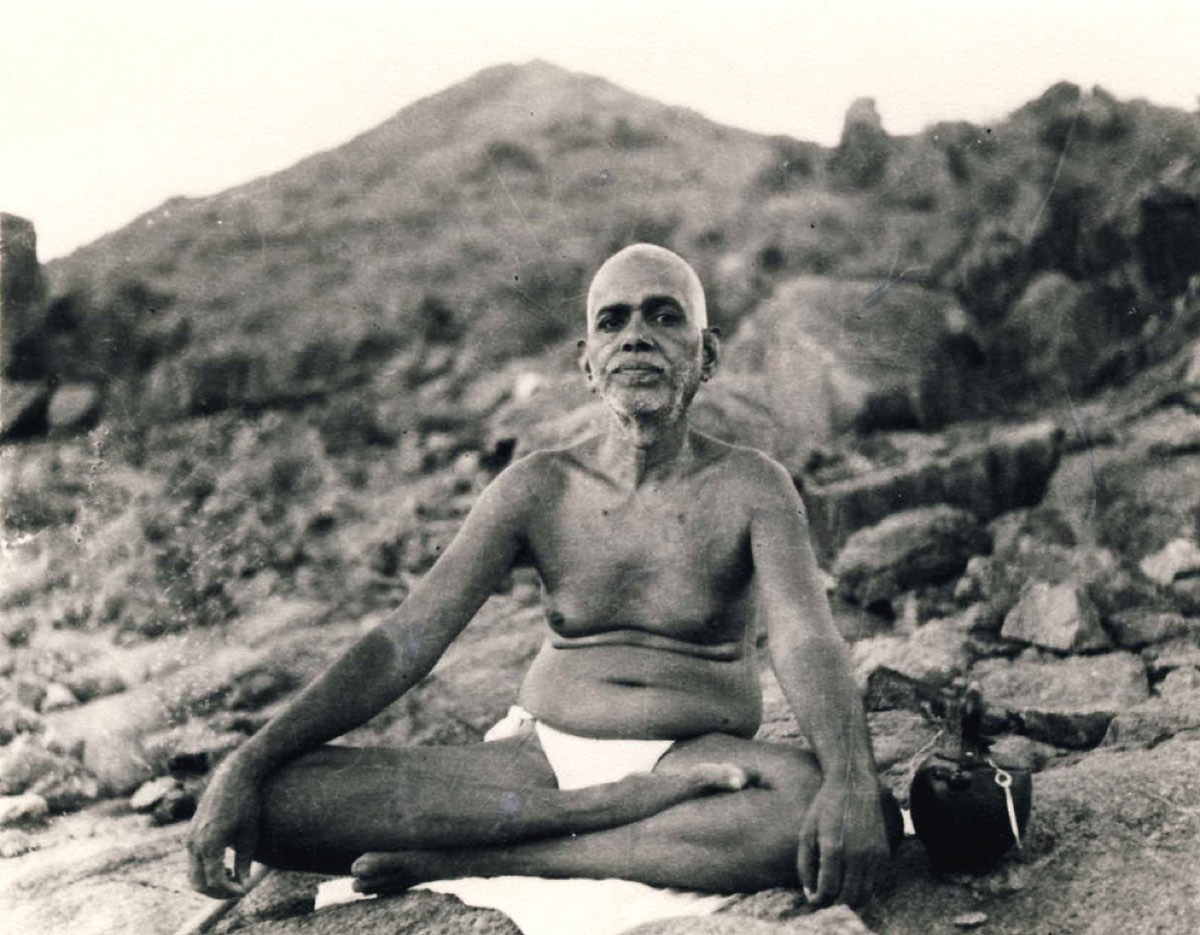
What is the form of God? What the hymn to Dakṣiṇāmūrti says, in Vedānta's reading
For non-dual Vedānta, the Dakṣiṇāmūrti-Stotram hymn describes God as the Whole in eight aspects, among them the observer itself.
· 2 min read · Sources

In 1 minute
- In the Dakṣiṇāmūrti-Stotram, a hymn attributed to Adi Śaṅkara, the form of God (Īśvara) is the Whole, described in eight aspects.
- The eight aspects are the five elements, the sun, the moon, and the observing subject; the individual is therefore included within the form of God.
- For non-dual Vedānta, God, the universe, and the individual are not separate, which sets it apart from a theology in which someone seeks salvation in an external God.
Full article
What does God's form look like? For Vedānta, an Indian philosophical tradition, the question has an answer that surprises anyone expecting a figure: the form of God is the Whole, and whoever asks is part of it. The answer comes from a short hymn, the Dakṣiṇāmūrti-Stotram, and it is unfolded by teacher Luciano Giorgio in a YouTube video.
The stotram is a hymn of praise to Dakṣiṇāmūrti, a form of the god Śiva as the silent teacher, attributed to Adi Śaṅkara, the philosopher who systematized non-dual Vedānta (Advaita). The word Vedānta means “the end of the Vedas”: it designates the most advanced part of India's sacred texts, tied to the Upaniṣads, and advaita means “not two,” a system holding that only supreme Consciousness, Brahman, is ultimate reality. Giorgio's reading is a philosophical interpretation within that school, not an academic study, and that is how this piece presents it.
Eight aspects for one Whole
According to this reading, the scripture describes Dakṣiṇāmūrti as the representation of the Whole and divides its manifestation into eight aspects.
Five are the elements, the pañcabhūtas: earth, water, fire, air, and ether, or space. They form the physical body, but also appear at subtler levels, in the sense organs and in the mind. Perception and thought would thus be subtle manifestations of the elements.
Two are the sun and the moon. The sun represents all stars and luminous bodies, and the moon, satellites and planets. Together, they symbolize time and pairs of opposites: heat and cold, day and night, active and passive, masculine and feminine, as in yin and yang.
The eighth is the subject, the “you” who observes. Giorgio considers it the most important aspect, since the universe is only experienced because there is someone to perceive it.
No one is left out
If the observer is part of the form of God, there is no separation between God, universe, and individual. Each person's body is part of the cosmic body, and the mind and senses are expressions of those same five elements at different levels. For Vedānta, excluding the individual from the whole is an illusion. The correct view is inclusive: everything is Īśvara, Vedānta's name for God, including the one who looks.
The contrast with dualist theology
Giorgio is careful to distinguish this view from dualist religious theology. In non-dual Vedānta, there is no separate individual seeking salvation through an external God. Everything is surrendered to Īśvara, and what remains is the self-evident presence of being itself, identical to it. He sums it up: “You are Īśvara; only Īśvara exists here.”
That sentence is what separates the schools. For dualist traditions, there is distance between creature and Creator, and devotion is the bridge. For Advaita, the distance is only apparent.
The Whole includes whoever asks
The hymn does not offer a catalog of symbols. It describes God as the Whole that shows itself in the elements, in time, in opposites, and, above all, in the observer. From this comes what Vedānta takes as its central knowledge: the unity of individual, universe, and divinity. The question about the form of God turns, in the end, back toward whoever asks it.
Source video
Sources and references for this article
Luciano Giorgio, video "What is the FORM OF GOD?"Luciano Giorgio's channel on YouTubeLuciano Giorgio, video "THE CONSCIOUS BEING free of time, space, and qualities"Luciano Giorgio (@olucianogiorgio) on InstagramLuciano Giorgio, video "VEDANTA – the final and only KNOWLEDGE"Luciano Giorgio, video "What is the path to KNOWING VEDANTA?"Advaita Vedānta, Portuguese WikipediaTranslated from Portuguese. This article was rewritten from a post on the original blog, in Portuguese. Read the original
Read next
 Vedanta and YogaGita, lesson 5: a blind king's question and the field of dharma
 Vedanta and YogaThe Prayer of Caritas read through Advaita Vedānta: a Spiritist prayer and Indian philosophy
 Western esotericism · VideoNag Hammadi Codex VI: eight texts from a library that resists easy labels
 The East · VideoŚūnyatā: what Nagarjuna meant by emptiness, and what it is not
 Vedanta and Yoga · VideoWhat Dies When Someone Dies? The Answer from Ramana Maharshi and Advaita Vedanta