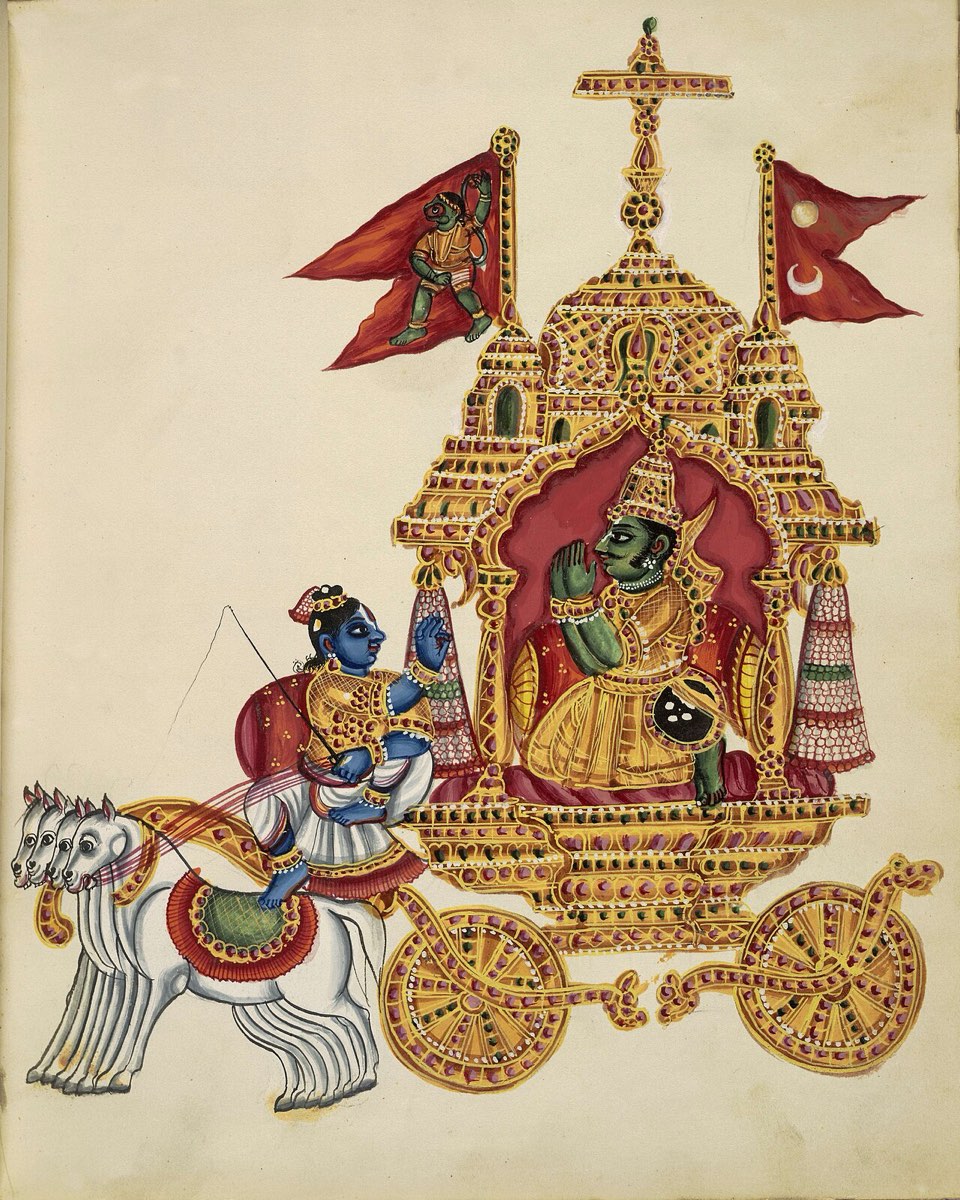
Gita, lesson 5: a blind king's question and the field of dharma
The fifth lesson reads the Gita's opening question as a portrait of Dhṛtarāṣṭra's attachment, and links human birth to karma and the chance of liberation.
· 2 min read · Sources

In 1 minute
- The Gita opens with a question from King Dhṛtarāṣṭra, in which Dayananda sees attachment and partiality.
- Kurukṣetra is a real place and also the inner field where dharma is put to the test.
- For the tradition, human birth results from a combination of karmas and is what makes the search for self-knowledge possible.
Full article
The Bhagavad Gita does not begin with Krishna. It begins with a question the blind king Dhṛtarāṣṭra puts to his counselor Sañjaya, who tells him what is happening on the battlefield. The fifth lesson in Swami Dayananda Saraswati's series lingers on that gesture, which is only apparently simple.
What the question reveals
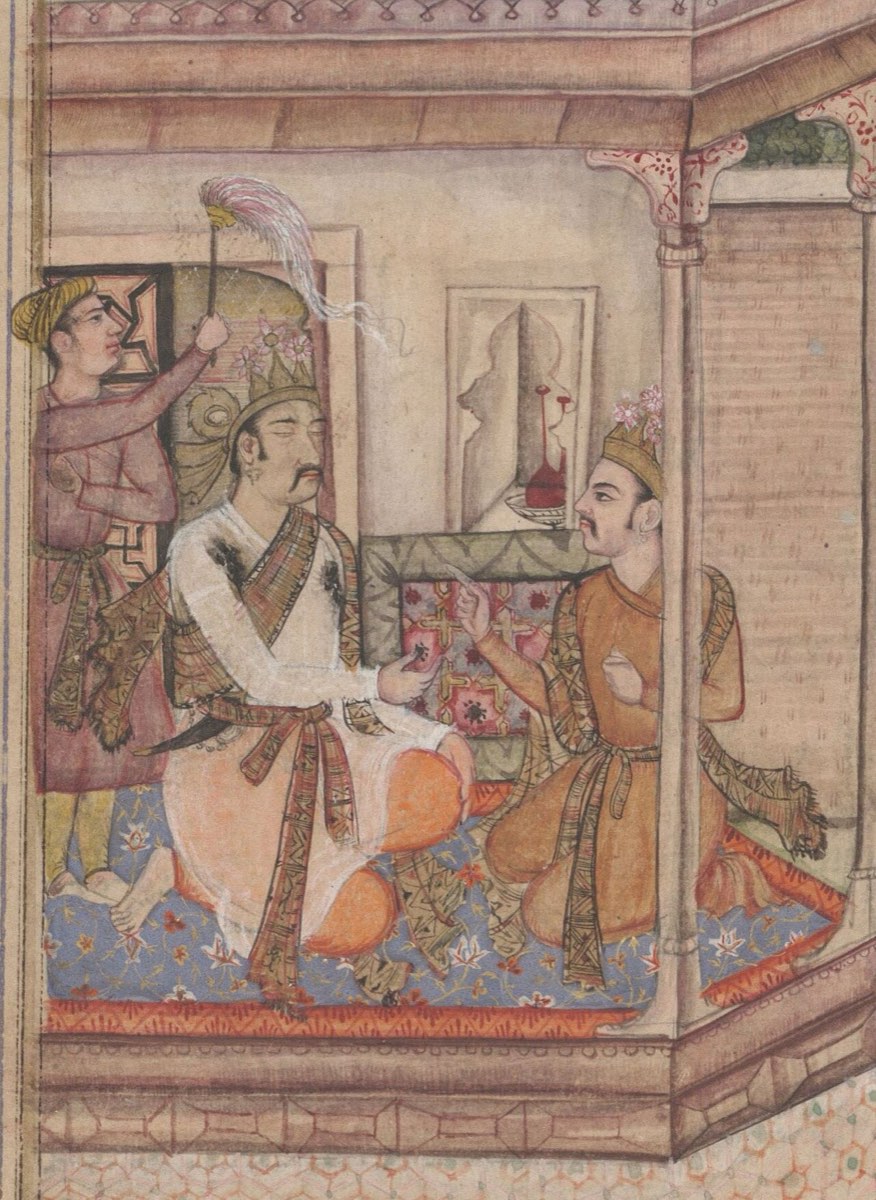
The king says "my sons," and then "the sons of Pāṇḍu," never calling them his nephews. The choice of words shows division and favoritism. The king knows war is approaching, but he still hopes the Pāṇḍavas will back down and that the throne will stay with his son Duryodhana. His question, then, reveals attachment and moral blindness, on top of his physical blindness.
A field of two kinds
The site of the battle, Kurukṣetra, is called dharma-kṣetra, the field of dharma, right conduct. It is a real geographic place near Delhi, and also an inner field, where each person tests what they consider right. The characters work as human types: Dhṛtarāṣṭra is the ego that knows it is wrong and persists anyway, Duryodhana is pride that will not yield, Sañjaya is the witness who sees everything, Krishna is the master, and Arjuna is the seeker.
Karma and human birth
A digression follows into the Indian view of karma and rebirth. Each type of body, from an animal to a human being, would result from a specific combination of accumulated actions. Only human birth offers freedom of choice and the possibility of mokṣa, liberation. For that reason it is described as a rare opportunity: it is the body that allows one to hear the Gita and seek self-knowledge. This is a belief of the Vedic tradition, and should be read as such.
The war that matters
Dhṛtarāṣṭra's fear is that Arjuna will give up the fight. The real conflict, though, takes place in Arjuna's mind, and, as in a mirror, in the mind of the reader.
The full study is in the book The Essence of the Bhagavad Gita, by Swami Dayananda Saraswati.
Sources and references for this article
The Essence of the Bhagavad Gita, Swami Dayananda Saraswati (book)
Translated from Portuguese. This article was rewritten from a post on the original blog, in Portuguese. Read the original
Read next
 Vedanta and YogaConsciousness with a body: what Vedānta says the “self” is
 Vedanta and YogaListening to see: what Vedānta asks of those who want to know themselves
 Western esotericism · VideoApocryphon of John: Barbelo, Sophia and the false god, in the Gnostic text from Nag Hammadi
 Western esotericismGnosticism: origins, schools, texts, and what survived the repression
 Vedanta and Yoga · VideoThe inner war: what the Bhagavad Gītā says to those caught between duty and fear