Gita, lesson 2: what the name Bhagavad Gita already says
The name Bhagavad Gita, "song of the Lord," already points to the teaching's style: knowledge offered with gentleness, never imposed.
· 1 min read · Sources

In 1 minute
- Gita means song; it is a feminine noun in Sanskrit, which Dayananda associates with a mother's care.
- Bhagavad comes from Bhagavān, the one who possesses six qualities in full: knowledge, strength, the power to create, sovereignty, glory, and detachment.
- The text is presented as a meditative recitation, meant to be absorbed, not merely memorized.
Full article
Many people know the title Bhagavad Gītā, and few ask what each word means. The second chapter in Swami Dayananda Saraswati's series starts from there: the book's name already carries a clue about how it teaches.
A song that cares
Gītā means "song." Dayananda explains that the word points to the gentleness with which the knowledge is offered: pleasantly, without imposition, even when the subject is difficult. He clarifies that this is not popular music. The Vedic tradition calls for reverent recitation, in which the meter and every syllable are part of how the meaning reaches the listener.
He also notes that the term is feminine in Sanskrit and links it to the image of a mother who gives her child what is good for them, even when the child does not yet know what they need. It would be a wisdom that welcomes and, at the same time, never gives up the truth.
Who speaks is Bhagavān
Bhagavad derives from Bhagavān, a title for one who possesses six qualities, called bhaga, in unlimited degree: knowledge, strength, the power to create, sovereignty, glory, and detachment. In the tradition, Krishna is this Bhagavān. The Gītā is, therefore, his speech, and its content moves away from moralizing and dogma to point to the root of the human problem: ignorance about one's own Being.
A text to absorb
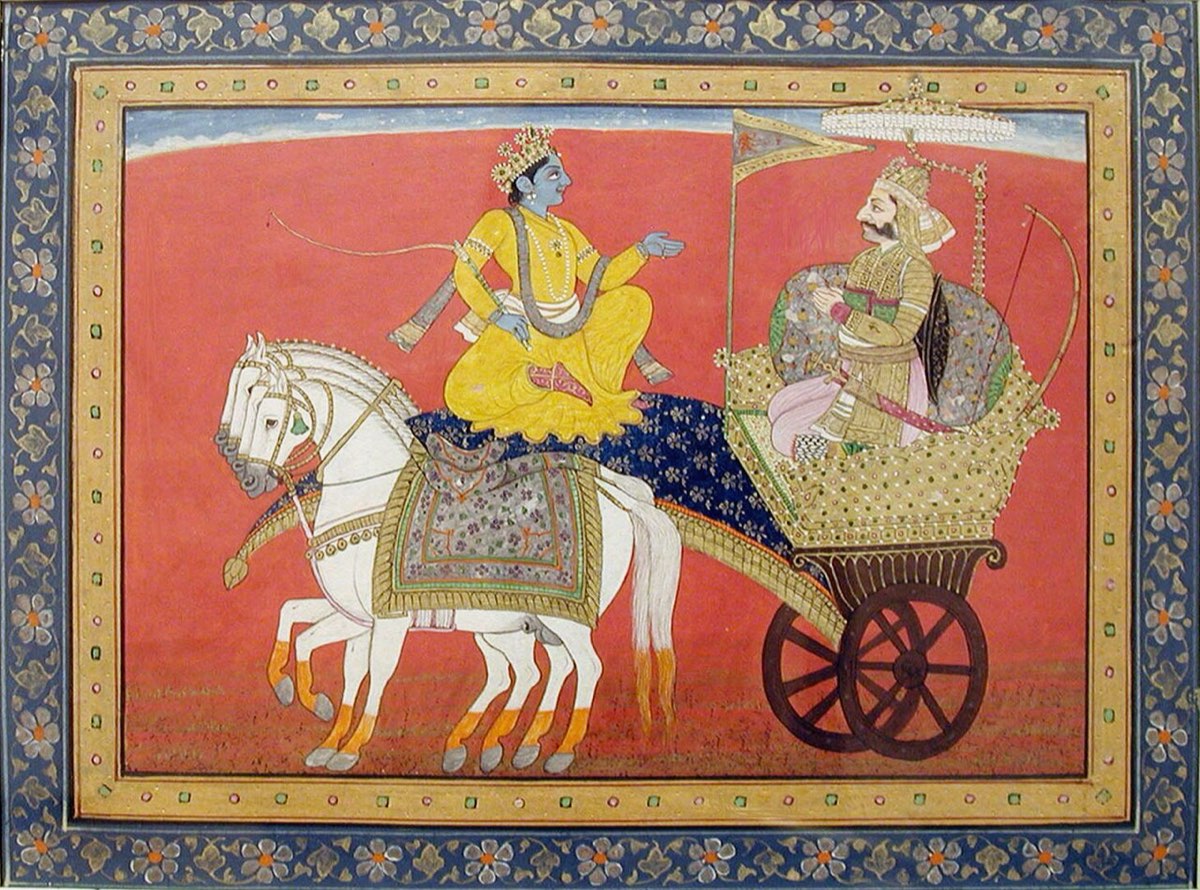
The book's singularity, in Dayananda's reading, lies in being instruction given in the middle of a battlefield, that of Kurukṣetra. Krishna does not preach: he clarifies, until Arjuna's view changes. That is why the Gītā is not meant merely to be sung, memorized, or venerated as an object. Each verse reaches the reader in layers: through the beauty of its images, through logic, and through the idea that the seeker already is what they are seeking.
The complete study is in the book A Essência do Bhagavad Gītā (The Essence of the Bhagavad Gita), by Swami Dayananda Saraswati.
Sources and references for this article
A Essência do Bhagavad Gītā (The Essence of the Bhagavad Gita), Swami Dayananda Saraswati (book)
Translated from Portuguese. This article was rewritten from a post on the original blog, in Portuguese. Read the original
Read next
 Vedanta and YogaListening to see: what Vedānta asks of those who want to know themselves
 Vedanta and YogaConsciousness with a body: what Vedānta says the “self” is
 Science and consciousnessVedānta and quantum physics: what the observer has to do with reality
 Western esotericism · VideoWhat was Gnosticism: a dualist heresy, or a path of self-knowledge?
 Vedanta and Yoga · VideoThe straw of Agni: what the Kenopanishad teaches about the pride of the gods