The ALL: why Hermeticism gives ultimate reality a name that sets no limits
The Kybalion calls ultimate reality “the ALL,” a name with no limits, grasped only by intuition, and ties the search for God to the search for the self.
· 3 min read · Sources
In 1 minute
- Hermeticists chose “the ALL” because the word sets no limits, avoiding the idolatry of names and forms.
- For the tradition, the ALL is unknowable to the mind, which separates and compares, but can be intuited; only what never changes is truly real.
- Religion and philosophy are two paths toward it, and the spiritual journey is an expansion of consciousness, not its annulment; these are Hermetic ideas, not scientific ones.
Full article
Almost everything life offers has a beginning and an end: people, relationships, projects, the body itself. And yet something in us suspects that behind it all stands something that does not pass. Hermetic philosophy gives that intuition a deliberately vague name: the ALL.
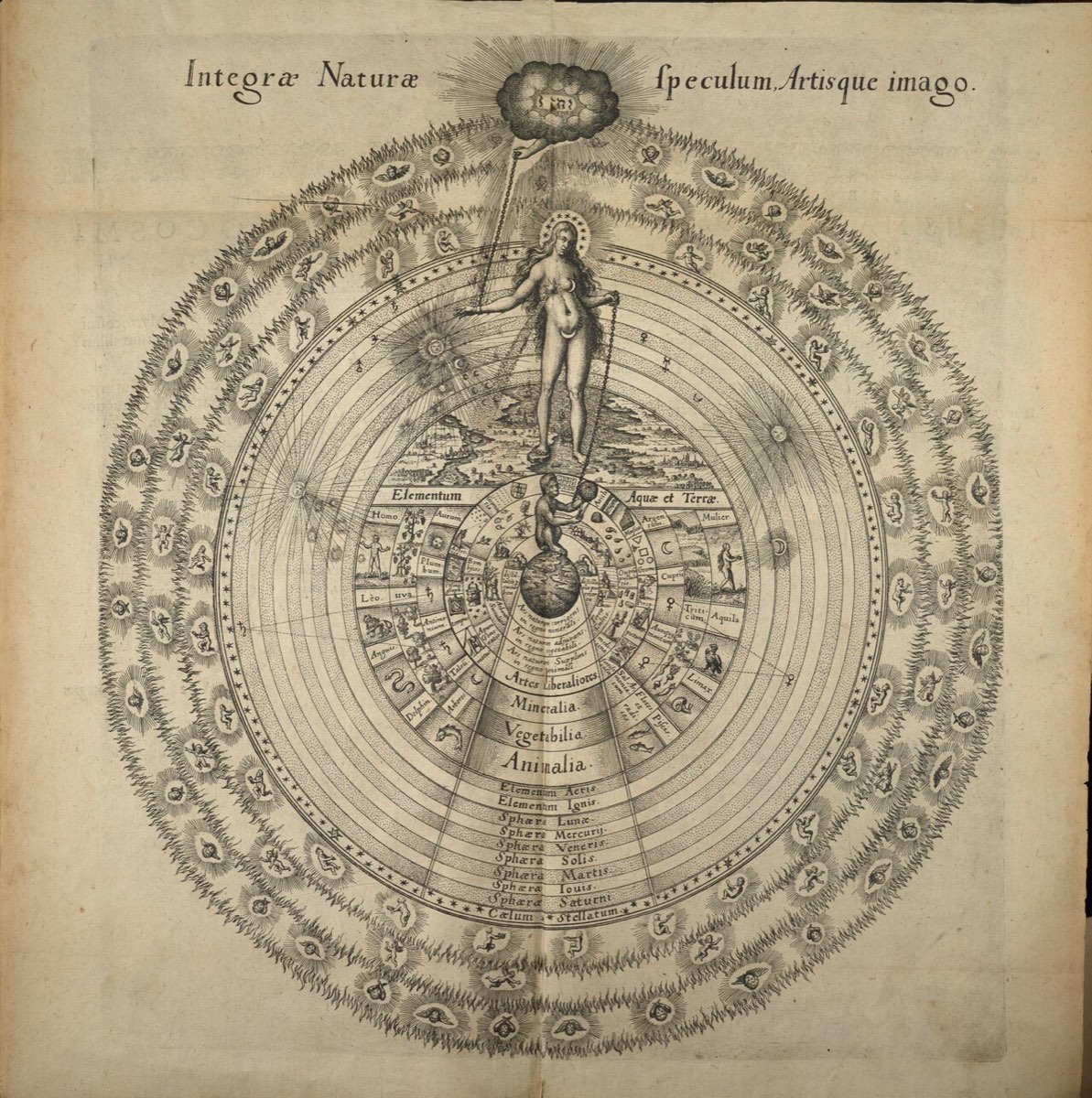
The Kybalion, published in 1908 under the pseudonym "Three Initiates," organizes Hermeticism into seven principles, and the ALL is the name it gives to ultimate reality, what other traditions call God, the Absolute, Spirit or Oneness. The fourth chapter, the subject of lectures at schools such as Nova Acrópole, addresses it. These are claims from the Hermetic tradition, not from scientific study.
A name that holds nothing
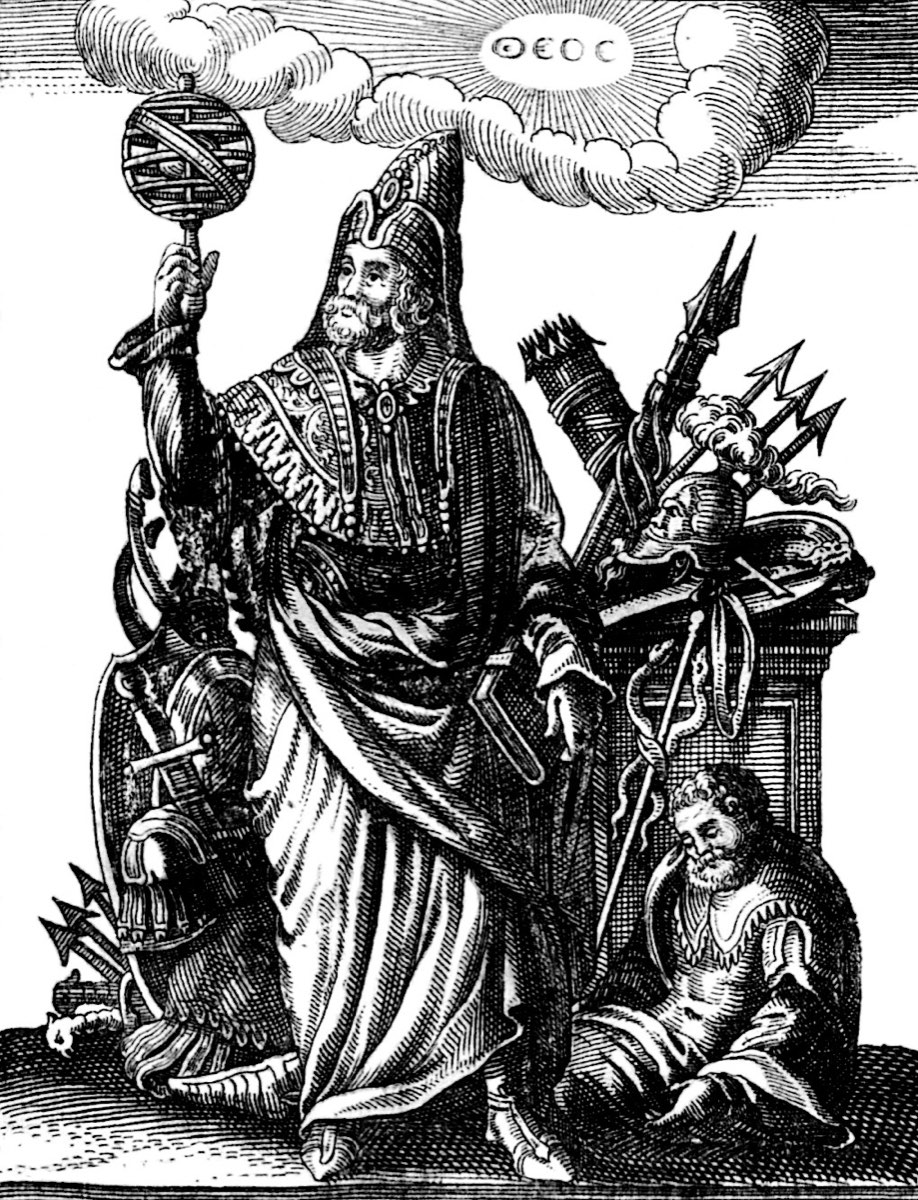
According to the tradition, Hermes Trismegistus, the Egyptian sage to whom Hermeticism traces its origin, taught that giving God a name limits him, since by nature he would be limitless. Hermeticists are said to have chosen "the ALL" because it is a word that avoids setting boundaries. The intent is to escape the idolatry of names and forms, which produce division, exclusion and fanaticism.
The ALL, then, is unknowable: the human mind cannot comprehend it, but can intuit and sense it. For teachers in this tradition, the discomfort of realizing that everything passes is the "existential anguish" that marks philosophical awakening. The question born from it, what is real if everything that exists passes away, would be the beginning of philosophy.
The book's opening verse asks that the flame kept for centuries in a dark temple not go out. That flame is eternal knowledge, which outlives civilizations, fashions and regimes, and Hermetic philosophy would be the effort to preserve it.
The limits of the mind
The mind knows by separating: it defines, compares, sets boundaries. Since the ALL encompasses beauty and ugliness, time and eternity, the seen and the unseen, it would lie beyond the opposites the mind works with. Logic cannot exhaust it. It would be accessible through expanded consciousness, intuition and spiritual experience.
Two errors are pointed out in trying to understand God. One is reducing him to the human, projecting our own qualities and flaws onto him. The other is pushing him so far away that he becomes irrelevant to practical life. The middle path is recognizing that seeking God is also seeking oneself, because the divine would live in each person as essence.
The string of pearls
To illustrate this, the tradition draws on the Sutratma, a concept from Indian thought. Each human being is a pearl. The invisible thread running through all of them is the soul. The whole necklace, the entirety, is Spirit, the ALL. Spiritual evolution, in this image, is the moment when a pearl stops looking only at itself and notices the thread that binds it to the others.
What is real
In antiquity, this reading holds, what was real was what is eternal. Today reality is confused with what can be seen and measured. For The Kybalion, the true is what does not change, and everything that can end, such as physical beauty, fame, possessions and ideologies, would not be real in essence. What is real is what cannot be stolen: true love, inner justice, wisdom.
From this comes the reading of religion and philosophy. Religion would relate to the ALL through symbols, archetypes and myths. Philosophy would seek the laws behind the symbols. Both have value if they foster human growth, fraternity and a sense of unity: a symbol that makes people better and more united already fulfills its purpose.
Signs in daily life
Teachers in this tradition invite us to recognize "moments of eternity" in ordinary life: a gesture of kindness that moves us, a work of art that silences us, a moment of contemplation in which everything seems to make sense. These would be fragments of the ALL manifesting, worth keeping as a compass.
The closing image is that the drop does not dissolve into the ocean: it expands until it becomes the ocean itself. The spiritual journey, in this reading, is not annulment but an expansion of consciousness until a person recognizes themselves in every being. The next chapter of The Kybalion deals with the Principle of Mentalism.
Sources and references for this article
Nova Acrópole lecture on the Kybalion, chapter 4
_The Kybalion_, chapter 4: The ALL
Kybalion, Wikipedia (published in 1908, and the seven principles)The Kybalion, Three Initiates, 1908 (full text in English, Project Gutenberg)Translated from Portuguese. This article was rewritten from a post on the original blog, in Portuguese. Read the original
Read next
 Western esotericism · VideoThe Kybalion and its seven principles: a 1908 book that speaks in Egypt's name
 Western esotericism · VideoThe seven hermetic principles of The Kybalion and the legend of Hermes Trismegistus
 Vedanta and YogaGita, lesson 12: heaven as a promise, and the search to feel at ease with oneself
 Vedanta and YogaVedānta: texts, schools, and the study method of one of India's six philosophies
 Vedanta and Yoga · VideoUpanishads: what the 108 texts underlying Indian philosophy are, and what they teach