Gita, lesson 9: the disciple, death and the Self that never changes
The ninth lesson marks the start of Krishna's teaching: Arjuna declares himself a disciple, and his sorrow is traced to confusion about death and who we are.
· 1 min read · Sources

In 1 minute
- Dayananda distinguishes three types of student and places the śiṣya, the disciple, as the only one who absorbs the teaching.
- Krishna says Arjuna speaks like a wise man but acts moved by confusion.
- Sorrow before death arises from identifying with the body; the ātman, the Self, is never born and never dies.
Full article
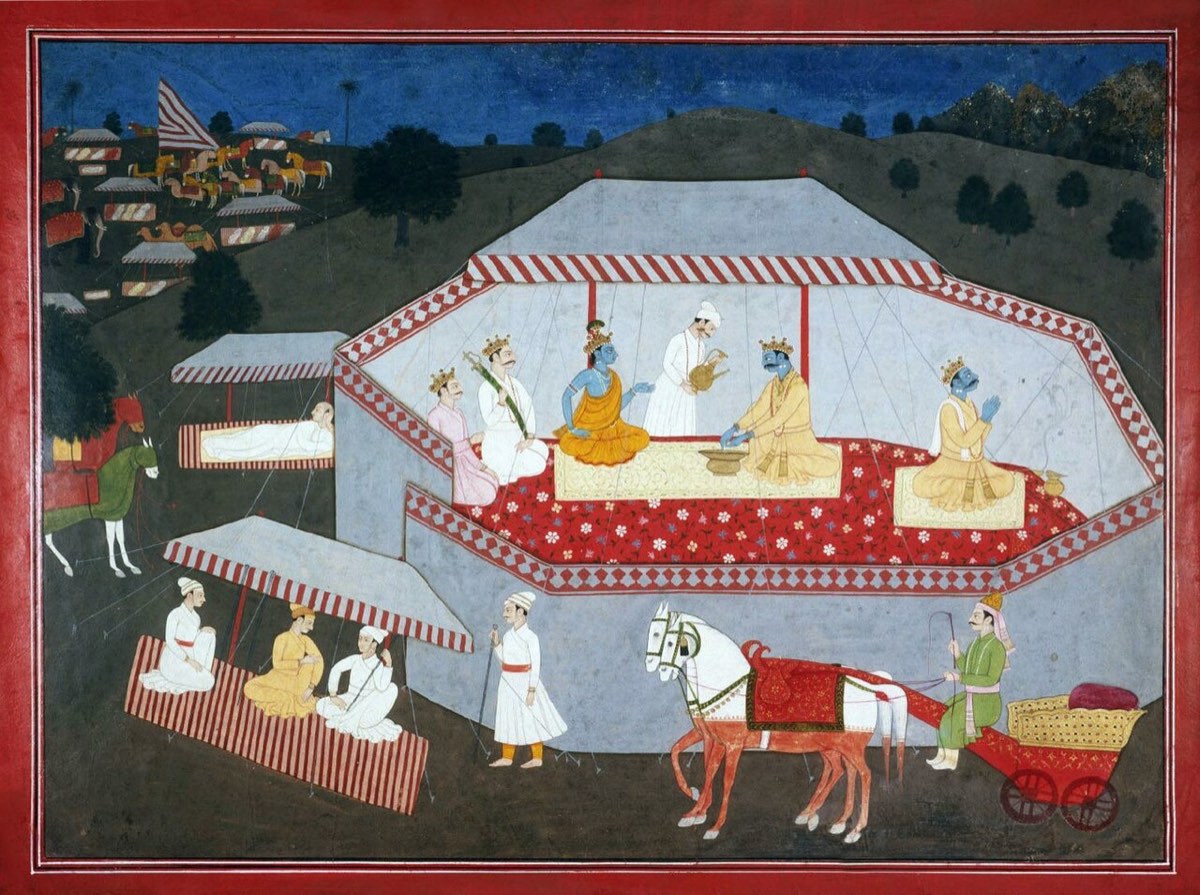
The Bhagavad Gita's teaching proper begins the moment Arjuna stops justifying himself and declares himself a disciple. That passage, and Krishna's opening verses, are the subject of the ninth lesson in Swami Dayananda Saraswati's series.
Three types of student
The tradition distinguishes three attitudes toward study. The vidvatsutṛṣṇu is the intellectually curious, who wants to know but makes no commitment. The śrotṛ is the regular listener, who attends class but absorbs almost nothing. The śiṣya is the disciple, who seeks transformation rather than mere information. By declaring himself a śiṣya, Arjuna admits his own ignorance and makes himself willing to listen. Only then can the teaching be received.
Wise words, confused mind
Krishna begins to speak with a smile, which Dayananda reads as a gesture of compassion. His first observation is that Arjuna speaks words of wisdom without understanding what he is saying. Arjuna's arguments about ethics and tradition sounded solid, but they arose from fear. According to Dayananda, it is common to justify flight with beautiful ideas, and quoting principles is not the same as understanding reality.
Death and the Self
Arjuna tries to avoid death by sparing lives. Krishna's answer is that whoever is born dies, and whoever dies is born again, and that this cycle depends on no one's will. Dayananda adds that death, called Yama in the Indian tradition, follows no order of age. The wise, in this reading, do not identify with the body, which comes and goes, but with the ātman, the Self, which is never born, never dies and never changes. That does not make them cold: compassion remains, but without blind anguish.
Renouncing what
For Krishna, true renunciation is not abandoning action but abandoning ignorance. Right action is born of knowledge, not of emotion.
The full study is in the book The Essence of the Bhagavad Gita, by Swami Dayananda Saraswati.
Sources and references for this article
The Essence of the Bhagavad Gita, Swami Dayananda Saraswati (book)
Translated from Portuguese. This article was rewritten from a post on the original blog, in Portuguese. Read the original
Read next
 Vedanta and YogaThe value of values: why Vedānta begins by preparing the mind
 Vedanta and Yoga · VideoDoes God sleep? What Advaita Vedānta says about the consciousness that never sleeps
 Science and consciousnessVedānta and quantum physics: what the observer has to do with reality
 The EastThe Book of Mirdad: Mikhail Naimy's parable on the self, silence, and the word
 Vedanta and Yoga · VideoWhat Dies When Someone Dies? The Answer from Ramana Maharshi and Advaita Vedanta