Gita, lesson 8: self-awareness, intelligence and a disciple's request
The eighth lesson starts from what sets humans apart from animals to show how Arjuna arrives at asking Krishna to teach him.
· 1 min read · Sources

In 1 minute
- For Dayananda, what sets humans apart is unchecked self-awareness, which brings reflection, ambition, and also self-rejection.
- Intelligence, buddhi, only has value if used to investigate who we are.
- Arjuna declares himself a disciple and asks for clarity, because his real problem is knowing who he is.
Full article
What sets us apart from other animals? Swami Dayananda Saraswati opened the eighth lesson in the series with that question, tying it to the moment when Arjuna, in the Bhagavad Gita, asks Krishna for help.
What sets us apart
Body and instinct are not exclusive to humans. Every species fears death and seeks pleasure. What is distinctive about our species is unchecked self-awareness, from which reflection, moral judgment, pride, shame and ambition arise, but also complexes and the ability to reject oneself.
Intelligence as wealth
By this logic, the greatest human wealth is buddhi, the faculty of reasoning, discerning and choosing. If it is not used to examine who this "I" is, it is like a fortune no one ever spends. The reflection extends to possessions. Freedom, Dayananda suggests, lies in being able to let go of what one has; whatever cannot be let go ends up possessing its owner, whether money, reputation, title or knowledge.
The request
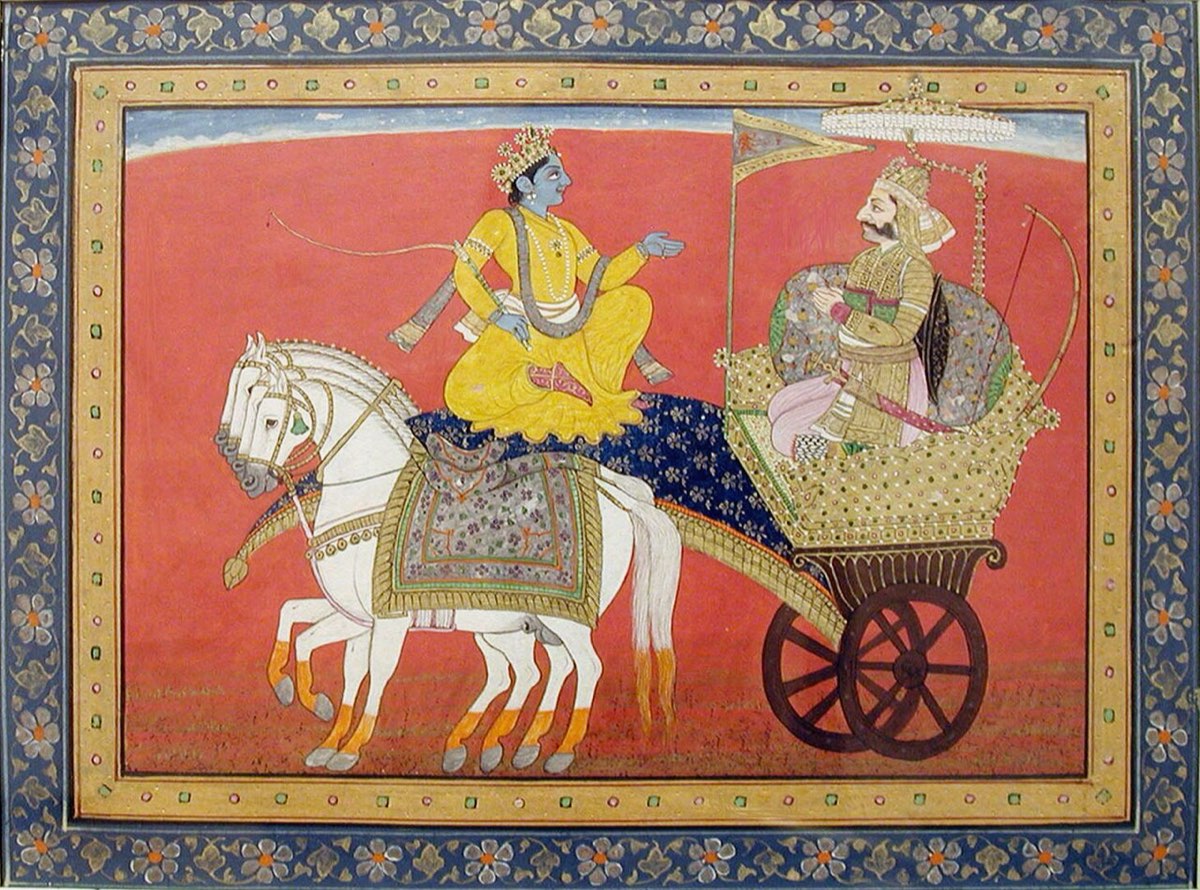
Arjuna recognizes that he knew the teachings but never applied them. He tells Krishna he no longer knows what is right, declares himself weak and confused, and accepts him as his teacher. For Dayananda, this is where the relationship between master and disciple begins. Arjuna does not ask for practical advice or a blessing: he asks for clarity, because he has realized his real question is knowing who he is.
Pleasure and the greater good
Here a distinction is drawn between preyas, what is sought in the world and is fleeting, and śreyas, the greater good, tied to clarity and liberation. Behind money, status, religion and even heaven, there would lie a desire for security and self-acceptance that no external pursuit satisfies in any lasting way. The claim is that the problem is not the lack of something, but the idea that something is lacking.
The full study is in the book The Essence of the Bhagavad Gita, by Swami Dayananda Saraswati.
Sources and references for this article
The Essence of the Bhagavad Gita, Swami Dayananda Saraswati (book)
Translated from Portuguese. This article was rewritten from a post on the original blog, in Portuguese. Read the original
Read next
 Vedanta and YogaListening to see: what Vedānta asks of those who want to know themselves
 Vedanta and YogaConsciousness with a body: what Vedānta says the “self” is
 Science and consciousnessVedānta and quantum physics: what the observer has to do with reality
 Western esotericismA Hermetic manifesto against "selective blindness": mind, ether, and archons
 Vedanta and Yoga · VideoThe straw of Agni: what the Kenopanishad teaches about the pride of the gods