Gita, lesson 7: when renunciation is just a way to run
The seventh lesson follows Arjuna's wish to walk away from it all, and shows why, for Dayananda, the way out lies not outside but in self-knowledge.
· 2 min read · Sources

In 1 minute
- Arjuna considers living on alms rather than fighting against his own teachers.
- Dayananda states that a life of renunciation is not an escape from dilemmas and demands maturity.
- Arjuna realizes that no kingdom would ease his sorrow, a first sign that the problem lies within his own mind.
Full article
When duty weighs too heavily, the idea of giving it all up gains its own appeal. That is what happens to Arjuna, the subject of the seventh lesson in Swami Dayananda Saraswati's series on the Bhagavad Gita.
Fighting those one respects
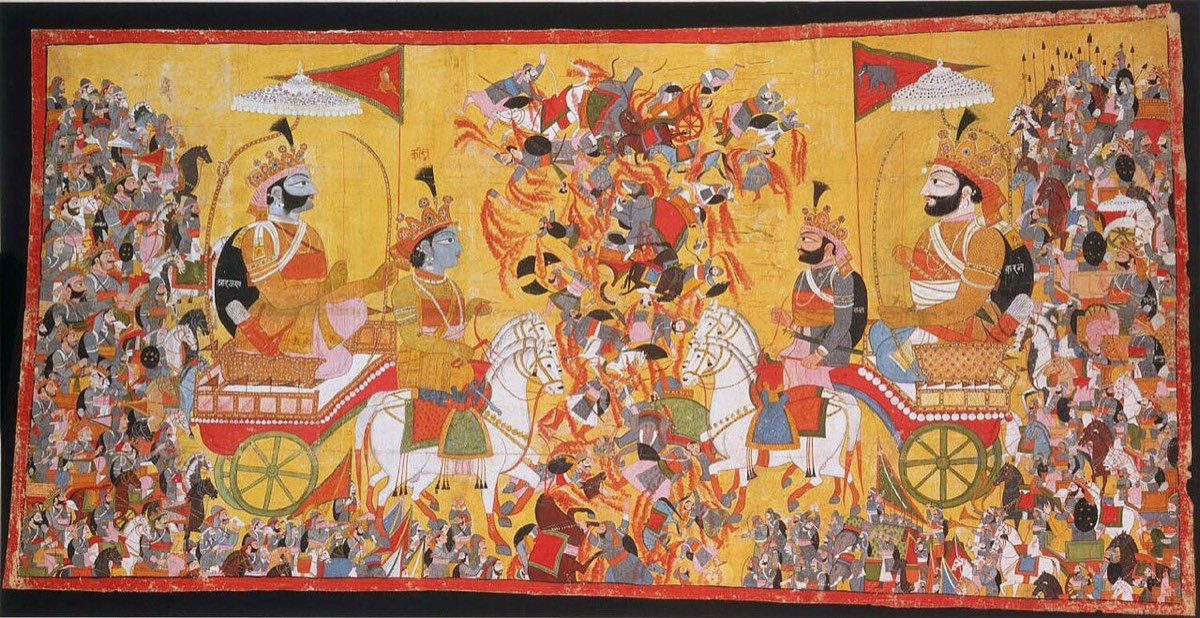
Arjuna answers Krishna with a plea: how can he loose arrows at Bhīṣma and Droṇa, teachers who deserve reverence? On another occasion, Arjuna had shot arrows at Bhīṣma's feet as a sign of respect. Now the war is real, and that gesture no longer fits.
The temptation of renunciation
Arjuna would rather live on alms than kill his teachers. In the Vedic tradition, saṃnyāsa, the life of renunciation, is a decision made in the name of self-knowledge and liberation, mokṣa. It is not an emergency exit. Whoever takes that path must be prepared to let go of ego and world, and Arjuna's crisis is emotional, not philosophical. Dayananda adds that donning the renunciant's robe for status would be nothing more than swapping one title for another.
Suffering lives in the mind
The turning point of the lesson comes in another of Arjuna's statements. Even with an unrivaled kingdom, or sovereignty over the gods, his sorrow would not lift. For Dayananda, this is where Arjuna begins to see that suffering does not come from circumstances but from confusion and a mistaken image of himself.
Training without clarity
Arjuna spent his life learning to fight, but not to think. Weapons, even divine ones, give him neither moral clarity nor emotional steadiness. A conflict like this is resolved only by a higher vantage point, and that is Krishna's role in the scene. Dayananda also notes that Arjuna grew up among sages without becoming one himself, because his heart was occupied with power and fame.
The question born of this crisis is no longer whether to flee or fight. It becomes what actually dissolves the sorrow.
The full study is in the book The Essence of the Bhagavad Gita, by Swami Dayananda Saraswati.
Sources and references for this article
The Essence of the Bhagavad Gita, Swami Dayananda Saraswati (book)
Translated from Portuguese. This article was rewritten from a post on the original blog, in Portuguese. Read the original
Read next
 Vedanta and YogaListening to see: what Vedānta asks of those who want to know themselves
 Vedanta and YogaConsciousness with a body: what Vedānta says the “self” is
 Science and consciousnessVedānta and quantum physics: what the observer has to do with reality
 Western esotericismA Hermetic manifesto against "selective blindness": mind, ether, and archons
 Vedanta and Yoga · VideoThe straw of Agni: what the Kenopanishad teaches about the pride of the gods